
John Eni-ibukun is an African Gospel and Afrobeats curator at Audiomack, one of the continent’s foremost music streaming platforms, where he thinks about how music travels, gets discovered, and lands with audiences in a fragmented digital world. Before that, he ran a digital press platform for artists.
Under the alias “June Sometimes,” he channels that knowledge into something more personal. His debut project, “Memories with Nostalgic Flaws,” is an interactive web-based game built around the emotional texture of growing up in Lagos in the early-2000s; communal play, cultural rituals, highlife, and the particular noise of a generation that came of age before the Internet took over everything.
The project is equal parts music and product: listeners decode clues, unlock narratives, and move through a layered storytelling system that rewards participation. In a music industry still running largely on traditional rollout strategies, that is a deliberate provocation.
- Explain your work to a five-year-old.
I put music in spaces they should be heard, performances at places they should be seen and I love to bring people together towards having memorable experiences.
- Did you stumble into curation or did you plan for it? How can anybody follow the same path?
I believe the foundation of curation for me has always been my taste. I believe that I have been putting my life together as one big curated project even before I got to know what curation means. I’ve always loved to create art, and to create well, I consume a lot also. Choosing what to consume, how to consume it and making meaning of what it does to my senses has heavily influenced what I create, so I think it’s fair to say that my consumption of various artforms is what made me the curator I am today. If you’d like to be a curator, I’d say, trust your taste and consume a lot. From doing these, you’d be able to eliminate what doesn’t work for you and also get a better understanding of what you have so much affinity towards.
- How do you apply technology to your work as a curator?
As much as taste informs what I like, I think data can point towards what other people like and that in so many ways makes my work easier as a tastemaker. I work with some digital data tools, curate music from various web dashboards and of course market creative products through digital services.
I wouldn’t go much into all the details of this, but I will say for sure that technology is very much important to how I work, and learning digital technology skills (especially when they’re still new) has helped me grow in my work as curator and my practice as an artist.
- What’s your honest take on how the algorithm of digital platforms treat African Afrobeats?
I think the algorithm feeds us what we feed it and is platform-dependent. For example, if I search for music from a particular artist and watch videos of them solely on YouTube, I’d keep getting recommendations of more of their content, and of content to artists the algorithm suggests are similar to them just based on data of the habits of people who search for things within that data group. It’s beautiful to be an artist when you can be funded by major artists, because then you can, in some ways, influence the algorithm through platform-targeted marketing.
When a label backs an artist and can activate influencers across multiple social platforms to keep talking about said artist every day — like how an Ayra Starr can get all the major music platforms on X to post the cover of her new album, off the hot Rihanna-MetGala-Tyla conversation; that virality cannot be said to be organic. There’s definitely a targeted goal to populate posts and thereby influence the algorithm to bring such posts to everyone’s timeline (or at least to the timelines of people who love music). I say this to imply that the algorithm in itself can “treat” an artist based on where they’re from (African in the context we’re speaking on), but most times, artists with major label backing can more easily bend it to their will in comparison to artists who are moving independently.
- What’s your favourite and least favourite part of the job?
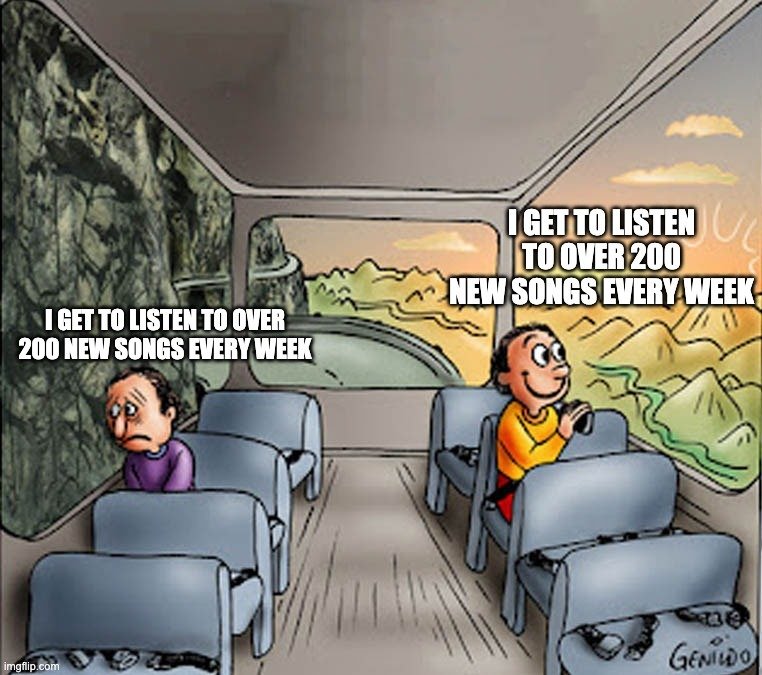
I’m answering this question with a meme cause the least favourite part of my work is also my favourite part of it.
- How did you come up with the idea for your game as a music distribution channel, and what has been the reception so far?
I came up with the idea for my album, Memories With Nostalgic Flaws first before I thought about making it into a game. I really just wanted to make very poetic songs that carry the emotional weight of growing up in the early 2000s in Lagos. That time period because as I grow older I’m forced to believe that the best years of our collective as a nation are far behind us. I realistically don’t agree. Anyway, while I made the songs, I made references to a lot of pop culture things like games, cartoon characters, nursery rhymes, films and whatnot. I just imagined how cool it would be for people to find out that I was actually weaving these things into songs and making the track titles complicated for them, and they may not notice what a genius I am.
To help my listeners really catch my references and witness the greatness of my ingenuity, I asked my friend, Mitchel Edah-Ekubo (who’s a software developer), to work with me to unpack the lyrics of the song and track titles in a quiz format on a web app. From the curator’s perspective, I just think it’s an exciting way to challenge artists to think of their work not just as a message, but also as code. It’s not just even about marketing, for me, it’s more about bringing a more sane way to engage with listeners and fans. It’s why at the end of the day, I’m really curious to see who that super listener is that will take the $300 game prize off my hands.