
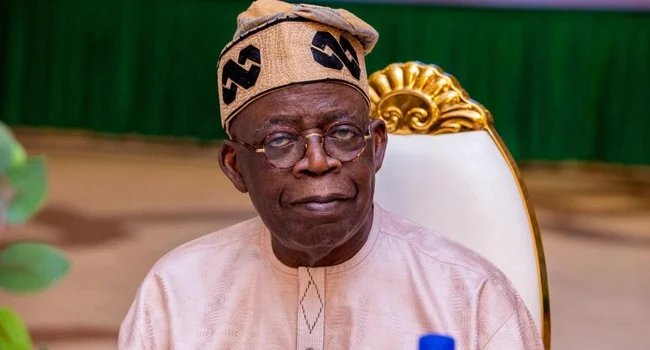
When President Bola Tinubu arrived in Uyo on Friday, November 6, 2026, it was evident that Akwa Ibom State was preparing for more than a routine presidential visit. The atmosphere was charged with excitement, political expectations and a strong sense of occasion. From the presidential reception at Victor Attah International Airport to the commissioning of landmark projects, the massive All Progressives Congress rally at Godswill Akpabio International Stadium and the state banquet at the ARISE Palm Resort, the visit brought together the defining elements of governance, politics, economic ambition and intergovernmental cooperation.
For Governor Umo Eno, it was an opportunity to present his administration’s achievements to the President and the nation. For the people of Akwa Ibom, it was an occasion to renew their expectations of the Federal Government, particularly on projects with the capacity to transform the state’s economic fortunes. For President Tinubu, it was also an opportunity to consolidate his relationship with a state whose political leadership had increasingly aligned itself with his administration and his 2027 re-election ambition.
The significance of the visit became even more apparent as events unfolded. What began as a presidential commissioning exercise would eventually produce one of the most consequential announcements in the state’s development history: the President’s approval of the long-awaited Ibom Deep Seaport.
President Tinubu was received at Victor Attah International Airport by Governor Eno, Senate President Godswill Akpabio, members of the National Assembly, state government officials, political leaders and enthusiastic supporters.
The reception set the tone for a day that would showcase the infrastructure and institutional investments undertaken by the Eno administration under the ARISE Agenda.
Among the major facilities commissioned was the new International Terminal Building at Victor Attah International Airport, an important addition to Akwa Ibom’s aviation infrastructure and its ambition to become a major destination for business, tourism and investment.
The airport’s new facilities, including the International Airport Hospital and Ibom Aviation Village, reflect a broader vision of aviation development beyond flight services. The objective is to build an ecosystem that supports aviation operations, specialised services, employment and the training of skilled professionals.
The President also commissioned Ring Road 3, a strategic road infrastructure linking Idoro Road to Ikot Ekpene Road through Uyo and Ibiono Ibom. The road is expected to improve connectivity, ease transportation and open up communities to greater economic activity.
Another important project on the commissioning schedule was the Airport–Okopedi Road, connecting communities in Nsit Atai and Okobo Local Government Areas. The road forms part of the administration’s wider effort to extend infrastructure development beyond the state capital and improve access to rural communities.
Other facilities commissioned during the visit included the Governor’s Office Annex, the Akwa Ibom Geographic Information System Office Complex and the Security and Command Centre.
The Command and Control Centre is particularly significant for security management. With its capacity to support surveillance, information coordination and emergency response, it is expected to strengthen the state’s security architecture and improve the capacity of relevant agencies to respond to emerging threats.
The President’s commissioning engagements also included the ARISE Palm Resort, a major tourism, hospitality and leisure investment developed by the state government. Situated on approximately 70 hectares, the resort represents an ambitious effort to turn tourism into an important component of the state’s economic diversification strategy.
Taken together, these projects reflect the administration’s emphasis on infrastructure, aviation, tourism, security and urban development. More importantly, they demonstrate an approach to governance in which physical infrastructure is expected to serve as a foundation for investment, employment and improved living standards.
If the commissioning ceremonies provided the developmental narrative of the visit, the gathering at Godswill Akpabio International Stadium supplied its political energy.
The stadium became the meeting point for APC leaders, stakeholders, elected representatives, party faithful and supporters from across the 31 local government areas of the state. It was a grand political reception that also served as an unmistakable endorsement of President Tinubu’s second-term ambition.
Governor Eno, in his welcome address, left little doubt about the political direction of his administration and the commitment of the Akwa Ibom APC to the President’s re-election project.
He described the gathering as evidence of the APC’s growing strength in the state and assured the President that Akwa Ibom would deliver more than two million votes in the 2027 presidential election.
But the governor’s most consequential intervention was not merely political. He used the occasion to renew the state’s demand for the establishment of the Ibom Deep Seaport, describing it as a strategic economic project capable of transforming Akwa Ibom and the entire South-South region.
Eno made a direct appeal to the President, declaring that the state was prepared to deliver two million votes while seeking the Federal Government’s commitment to the port.
The request was both a political undertaking and a development proposition. The governor’s argument was that the deep seaport would unlock the state’s maritime potential, attract industrial investment, create employment and position Akwa Ibom as a major gateway for international trade. Then came the moment that changed the character of the rally.
Responding to the governor, President Tinubu acknowledged the importance of inclusive development and the need to create economic value across the country. He recognised the request made on behalf of the people and leadership of Akwa Ibom and announced:
“Your request for the Ibom Deep Seaport is hereby approved. The Ibom Deep Seaport will bring associated economic value and economic development to the people, just as the governor has said.” It was a defining moment for the state.
For decades, the deep seaport has remained one of Akwa Ibom’s most ambitious economic aspirations, dating back to the original Ibaka Deep Seaport and Industrial City vision. The President’s approval marks an important milestone in the state’s efforts to establish a stronger presence in Nigeria’s maritime and logistics economy.
The announcement also gave a new dimension to the relationship between the Federal Government and the Akwa Ibom State Government. Beyond political support, the state was seeking a strategic federal commitment that could influence its economic trajectory for generations.
President Tinubu also announced approval to upgrade Victor Attah International Airport to international airport status, further strengthening the state’s aviation ambitions.
Beyond the deep seaport announcement, the President used the rally to outline his administration’s development priorities and make a case for continuity in government.
He commended Governor Eno for what he described as significant strides in infrastructure development and human capital investment, acknowledging the governor’s efforts in positioning Akwa Ibom for greater economic opportunities.
Tinubu also spoke about the importance of agricultural development, particularly the economic potential of palm produce in Akwa Ibom. He challenged the state to look beyond palm cultivation and develop skills, processing capacity and industries that could turn agricultural resources into sustainable wealth.
“There is no reason why Akwa Ibom cannot leverage the value of its palm trees and agricultural produce. There is no reason that we cannot create skills development — skills that are enduring and everlasting,” he said.
The President further recalled the request for international status for Victor Attah International Airport, confirming that he had approved it. He connected the approval to his administration’s broader commitment to extending development across the country’s geopolitical zones.
On education and the economy, Tinubu promised a better future built around development, education, vocational skills and employment opportunities. He also highlighted the gains of his administration’s reforms, arguing that the country was moving away from the difficult economic circumstances inherited when he assumed office.
Addressing young people, he urged them to scrutinise the credibility, track records and commitment of politicians seeking their votes. He particularly emphasised the importance of the Permanent Voter Card, describing it as the instrument through which citizens could determine their political future.
“The weapon you have is the PVC,” he told the crowd, encouraging eligible voters to collect their cards and participate in the forthcoming election.
The President also pointed to the improvement in the ability of state governments to meet their financial obligations, recalling that 27 of the 36 governors could not meet salary obligations when he assumed office. He maintained that the country had moved beyond what he described as a period of economic uncertainty and possible bankruptcy.
He thanked Governor Eno for his hard work and commitment to the people of Akwa Ibom, a recognition that reinforced the cordial relationship between the two administrations.
Perhaps the most memorable political moment came when Tinubu expressed affection for the people of the state and declared his intention to spend the night in Akwa Ibom.
“Thank you, Akwa Ibom. I love you with my heart. I will sleep in Akwa Ibom tonight. It’s going to be a second-term presidential sleep. I will dream of victory too.” It was an unmistakable reference to his 2027 re-election ambition, delivered in a manner that drew excitement from the stadium.
The President also danced to the APC campaign anthem, On Your Mandate, as supporters celebrated his presence. The symbolism was unmistakable: the visit was as much about political mobilisation as it was about governance. The rally also gave other prominent political leaders a platform to articulate their support for the President.
Vice President Kashim Shettima commended Akwa Ibom and the wider South-South region for supporting the Tinubu administration. He challenged the people not to be misled by politicians who criticise government policies without offering credible alternatives.
Speaking on behalf of the Nigeria Governors Forum and the South-South governors, Bayelsa State Governor Douye Diri applauded Tinubu’s leadership, particularly the Lagos-Calabar Coastal Highway and the Nigerian Education Loan Fund.
Describing the coastal highway as a landmark infrastructure project, Diri declared that the six South-South governors were firmly behind the President. “All six governors of the South-South are solidly behind you. Carry go,” he assured him.
Senate President Godswill Akpabio also commended the President for his commitment to national development and the support extended to the region. He assured him of the National Assembly’s continued cooperation, noting that the legislature had provided a strong foundation for the implementation of the administration’s programmes.
Akpabio further acknowledged the President’s approval of a Federal University of Agriculture, a Federal University of Technology and a Police Academy for Akwa Ibom State, describing the decisions as significant additions to the state’s educational and institutional development prospects.
The combined message from the political leadership of the region was clear: the South-South was increasingly positioning itself as an important constituency in the President’s political and developmental calculations.
After the political engagements and commissioning activities, the presidential visit moved to another memorable setting: the ARISE Palm Resort, where the Akwa Ibom State Government hosted President Tinubu to a state banquet.
The choice of venue was particularly significant. The resort, one of the flagship investments of the Eno administration, provided an opportunity for the President to experience firsthand the tourism and hospitality vision behind the ARISE Agenda.
Developed on a reclaimed site of approximately 70 hectares previously threatened by gully erosion, the resort represents an ambitious conversion of an environmental challenge into an economic and recreational asset.
Governor Eno, in his remarks, expressed profound gratitude to the President for honouring his promise to visit Akwa Ibom and, more importantly, for approving the Ibom Deep Seaport.
He recalled the President’s personal assurance that he would fulfil his promise to visit the state, noting that the visit had finally materialised.
The governor also acknowledged the Federal Government’s support to state governments, particularly the release of resources that had helped subnational administrations implement development programmes.
For Eno, the President’s approval of the deep seaport was the visit’s defining achievement. He described himself as fulfilled, recognising the importance of the project to the aspirations of the people and the economic future of the state.
He also used the occasion to acknowledge the President’s contribution to the development projects showcased during the visit. “We credit you with all of these projects. So, we thank you. We thank you,” the governor said.
Senate President Akpabio, in his characteristic manner, offered a strong endorsement of Tinubu’s leadership. He described the President as a man of integrity, candour, vision and performance, recalling how he had admired Tinubu’s developmental blueprint during his years as a young professional in Lagos.
Akpabio said the experience shaped his understanding of leadership and governance. “Mr President, you are a man of integrity, a man of candour, a thinker, and a performer. In Akwa Ibom, we try to copy you,” he declared.
He particularly referenced the removal of fuel subsidy, the construction of the Lagos-Calabar Coastal Highway and the administration’s economic diversification efforts as examples of a leadership committed to difficult but necessary decisions.
Describing Tinubu as a leader who delivers on his promises, Akpabio assured him of the continued support of the National Assembly and the political leadership of the South-South.
He also renewed the political commitment made at the stadium, declaring that Akwa Ibom would deliver more than two million votes for the President in 2027. “Till you finish in 2031, you shall never walk alone,” Akpabio assured him.
The traditional institution was equally represented at the banquet. The President-General of the Supreme Council of Akwa Ibom Traditional Rulers and Oku Ibom Ibibio, His Eminence Ntenyin Dr Solomon Etuk, expressed appreciation for the President’s approval of the deep seaport and offered prayers for his success in the forthcoming presidential election.
He also appealed for greater federal appointments for Akwa Ibom indigenes, reinforcing the state’s expectation of increased participation in national governance.
The banquet was attended by First Lady Senator Oluremi Tinubu, the wife of the Vice President, Deputy Speaker of the House of Representatives, South-South governors, ministers, federal and state legislators, members of the State Executive Council, traditional rulers and other prominent political stakeholders.
Presidential visits are often remembered for the speeches delivered, the projects commissioned and the political excitement they generate. However, the November 6 visit to Akwa Ibom deserves to be assessed against a larger developmental context.
First is the Ibom Deep Seaport. Its presidential approval has given renewed impetus to an ambition that has remained part of Akwa Ibom’s economic development conversation for decades. If implemented effectively, the project could position the state as an important maritime, logistics and industrial destination.
The anticipated benefits extend beyond the immediate host communities. Port operations could stimulate shipping, warehousing, manufacturing, transportation, hospitality, agriculture and allied services. It could also create new opportunities for young people and businesses across the South-South.
However, presidential approval is an important beginning, not the completion of the project. Detailed planning, regulatory processes, financing, federal and state coordination and actual construction will determine how quickly the ambition becomes reality.
Second is the upgrade of Victor Attah International Airport to international status. This approval, combined with the new terminal, aviation village and other airport infrastructure, strengthens the state’s ambition to become a more competitive destination for business, tourism and international connectivity.
Third is the political significance of the visit. The presence of the President, Vice President, Senate President, governors and other national political leaders in Uyo demonstrated the growing importance of Akwa Ibom within the APC’s South-South political strategy.
Governor Eno’s decision to align his administration with the Federal Government has also provided a platform for stronger intergovernmental cooperation. The presidential approvals announced during the visit offer tangible illustrations of what such cooperation can achieve.
It is also important to recognise the symbolism of the ARISE Palm Resort. A facility developed on reclaimed land that once posed an environmental threat to the state now stands as a major tourism and hospitality investment. Its use as the venue for the presidential banquet brought the development narrative full circle.
A visit, a promise and a political statement
Looking back, President Tinubu’s visit to Akwa Ibom was a convergence of several important moments in the state’s political and developmental history.
It was an opportunity for Governor Umo Eno to showcase his administration’s investments in infrastructure, aviation, tourism, security and human capital development. It was also an opportunity for Akwa Ibom to present some of its long-standing economic aspirations directly to the highest office in the land.
But the defining moment was undoubtedly the approval of the Ibom Deep Seaport, accompanied by the upgrade of Victor Attah International Airport to international status.
At the Godswill Akpabio International Stadium, the President received an emphatic political endorsement. At the ARISE Palm Resort, the state’s political and traditional leadership reinforced that commitment in an atmosphere of appreciation and fellowship.
For Tinubu, the visit offered an important demonstration of political support ahead of 2027. For Eno, it reinforced the value of a working relationship with the Federal Government. For Akwa Ibom, it raised fresh expectations of economic transformation.
The real test, however, will be implementing the commitments announced and translating political goodwill into enduring development.
The people of Akwa Ibom have made their expectations known. The President has responded with significant commitments. The responsibility now is to ensure that the promises made in Uyo become projects delivered, opportunities created and prosperity shared.
Welcome to the new possibilities of Akwa Ibom.
Dr Umo-Udofia is a Special Assistant to the Akwa Ibom State Governor on Media