
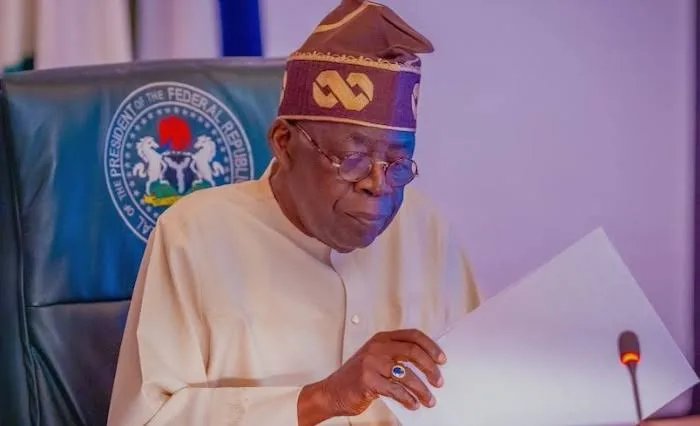
In this interview with DAMILOLA AINA, a member of the All Progressives Congress Presidential Campaign Council, Kemi Asekun-Shittu argues that the party’s biggest challenge ahead of the 2027 elections is convincing Nigerians to understand and appreciate President Bola Tinubu’s economic reforms and their long-term benefits
How difficult is it to campaign for President Bola Tinubu’s re-election when millions of Nigerians are probably angry with the current administration?
Well, I would say that it’s not as difficult as many may envisage. For most Nigerians, it’s basically about making them understand better what the government is about, what the government has been able to do and what the government intends to do. We have, in no way, said that it has been easy, and I think that our admission of the fact that, indeed, things are tough across the board makes it a bit easier because it shows that we are not speaking from a position of ignorance about what people are experiencing. I believe that makes it a bit easier on everybody.
The government has also repeatedly told Nigerians to tighten their belts and reduce spending. But we are struggling to see the government do the same.
Well, I would like to start with the issue concerning the APC Youth Leader because, if I dodge it, it will be insulting to the general public. The seven Prado jeeps given to the youth league were for mobilisation. It was a donation, and they were not bought with public money. However, was creating a video to show them off the right thing to do? I would say no, because optics matter in all spheres of public communication. What you say and what you seem to be saying must align. Otherwise, it will mean that you’re taking the public for fools, which is not what the All Progressives Congress stands for.
With regard to the other government officials, personally, I have not seen the convoy of any minister being much larger than what Mr President has proposed. But you see, in a democracy, all of us are police officers. That is why it is government of the people, for the people and by the people. The press can assist by reporting whenever directives by Mr President are seen to be flouted. Be that as it may, I haven’t seen any minister with a convoy much larger than the number Mr President proposed per minister.
However, it is important to situate the fact that, a lot of the time in politics, as a minister, you may not have more than two vehicles, but you probably have hangers-on who are known to you and want to move in your convoy. So, sometimes, most of the convoys visible to the Nigerian public may not necessarily belong to the officer or public servant involved. Sometimes, they are just hangers-on who believe in you or your followers, who simply ride in your convoy.
Can you honestly say that the average Nigerian is economically better off today than before the President won the election in 2023?
To be honest with you, if you say “average”, it might be difficult to weigh. I have seen Nigerians who say they are better off today than they were in 2023. I have also seen Nigerians who say they are worse off today than they were in 2023.
What are the numbers?
Well, I do not have the numbers statistically. What I do know is that the World Bank has said that the poverty level, which has consistently risen since 2014, has tanked, as we speak, and that it has come to a halt. It is no longer rising. The World Bank has also said that, as we move on, if we stay the course, this poverty level will start to decline. That is what President Tinubu’s macroeconomic policies have done. So, we can now rightfully look forward to a decline in poverty, which has consistently risen since the early to mid-2010s.
Let me also add that some Nigerians have been able to take advantage of some of Mr President’s policies and executive orders. For example, Mr President, at some point, said we were going to implement the Nigeria First policy. The Nigeria First policy means that whatever it is that a Nigerian can provide, if a foreign counterpart is providing the same, then the Nigerian should be prioritised. I have seen quite a number of Nigerians take advantage of that.
There is the digital postcode system by the Nigerian Postal Service, which was created by three young Nigerians and adopted by NIPOST. This is an initiative that had been proposed over a decade ago, and nothing was done about it. These young Nigerians were able to sell it to the Postmaster-General, who bought the idea in line with Mr President’s Nigeria First policy. She presented it to the Minister of Communications, Innovation and Digital Economy, and it got to the Federal Executive Council. As soon as it got to the Federal Executive Council, Mr President, seeing that it was in line with his Nigeria First policy, directed that it be deployed, and today we have the digital postcodes.
That tells you what Mr President is doing. Those in the universities who ordinarily would have been unable to complete their university education without the availability of NELFUND now have a beneficial policy that helps them go through school. Technically, I see the Nigerian Education Loan Fund as a free way to go to university because, if after two years you still do not have a job, Mr President says, write NELFUND a letter, and until you find that job, you don’t have to pay back your loan.
So, there are people who say they are worse off, and equally, there are people who say they are better off. What we can only say is: dear Nigerians, let us look at the cup as half full rather than half empty. Things may be tough for now, but it is not in vain. It is like a woman who is in labour. The labour she is going through is so that she can hear the cry of her child. So, yes, labour is one of the most painful experiences that a woman will ever go through. But she will go through it, and when the cry of the baby comes, it becomes a thing of joy for everybody. She even forgets that she ever experienced that labour. If these pains could have been eased, Mr President would have made them so. Unfortunately, there was no easy way, and there is no easy way to have brought this about.
The President has been in politics for a while, so he probably had an idea of what was coming. Couldn’t the President have carried out the reforms in a less painful way?
I am very glad that you mentioned that Mr President has been in this game for a while and knew that this was coming. The current Emir of Kano, HRH Sanusi Lamido Sanusi, who was the CBN Governor, mentioned that there was fire on the mountain. The current Director-General of the World Trade Organisation, Dr Ngozi Okonjo-Iweala, who was the former Minister of Finance, mentioned it. Virtually everybody who was involved with our finances at some point or another mentioned that we were in trouble financially. They all mentioned that the subsidy was killing us and that the various exchange rates of the naira were destroying us. The rich were gaining at that time, while the poor were not gaining personal wealth. The challenge is that when you want to end something as difficult as this, everybody will feel the pinch. What even the less privileged thought they were gaining was infinitesimal compared to what the rich were gaining.
But unfortunately, when the pain came, as it was bound to come, everybody felt it to a certain degree. And it is that degree of pain that percolated from the top to the bottom. Mr President has said it over and over again, and I will reiterate on his behalf: if there were an easy way to do this, Mr President would have done it.
But there was absolutely no easy way to do it. And you notice that since Mr President put these policies together, virtually all those who look at the metrics of economies across the world have commended him. They have commended Nigeria, and they say they see the light at the end of the tunnel.
What we are trying to do now, as members and spokespersons of the Campaign Council, is to help the general public understand these challenges better. That’s why you see that Mr President, in his wisdom, included a woman among his spokespersons. Besides that, he included several men who understand these issues and can communicate them, to say: go out and help the people understand these things better.
Can you explain more government policies that Nigerians should be aware of and could benefit from?
Let me start with the Nigeria First policy. I explained that earlier. Let me also add the removal of electricity from the Exclusive Legislative List to the Concurrent Legislative List, which President Tinubu brought to life when he signed the Electricity Act in 2023, thereby opening up a number of opportunities for anyone who wants to operate in the energy sector with regard to the provision of electricity for Nigerians.
I actually saw on TikTok, a few weeks or months back, a young man who has been able to use a solar system to provide electricity for his neighbours. The removal of electricity from the Exclusive Legislative List means that Nigerians can now take advantage of the opportunity to provide electricity for one another. People can then say, I want to be able to provide the power that this estate will use, and have the people in the estate pay them directly.
They can even now use the assets belonging to electricity providers to supply electricity to homes. That, for me, is a massive business opportunity.
But some interested entrepreneurs don’t have the capital.
When Alhaji Aliko Dangote was going to complete his Dangote Refinery, he did not have all the capital, but he didn’t use only his own capital. He borrowed. Dangote could have said, you know what, they have not yet removed the subsidy; hence, I won’t venture into building a refinery. The subsidy makes it difficult for investors to operate in the downstream sector. And that is why, for several decades, what we were doing was exporting crude oil and importing petrol and finished products.
For a country this big, with what we use and the amount of petrol that we consume, importing all our petrol needs and by-products was suicidal. Many investors abandoned the downstream sector because of the subsidy; no businessperson who is worth their weight in gold will operate in an industry where the government is consistently subsidising products because it is unprofitable. Any time there is a subsidy, there is the possibility of arbitrage. So, what you will see is some people working, while others earn unconventionally or illegally.
President Bola Tinubu, being an accountant and understanding how business works, knew that for as long as arbitrage existed, we would never be able to grow that sector of our economy. That is why, painful as it is, he worked on the fuel subsidy and the naira exchange rate. It wasn’t an easy decision to make. But anybody who understands economics knows that it was suicidal to continue with the arrangement.
Is there a plan to weaken the opposition?
For those who understand or know President Tinubu a little, you would appreciate the fact that he’s a democrat, through and through. But, you know, the idea of politics in itself is to ensure that you have your act together. Don’t forget that the President, at some point, used to be called the Okanlomo in his AD days.
Let me take you down memory lane. In 2003, President Olusegun Obasanjo struck a deal with all the South-West states that had been won by the Alliance for Democracy in 1999. “I am one of you; we are all Yorubas. In 1999, you did not vote for me. But in 2003, let’s have a deal. You vote for me at the federal level, and I will let you have your states to govern.”
Interestingly, all the AD governors agreed to deal with him at that level. The only person who said that was not democratic was the current President, which created a problem between him and the AD leaders at that time because they did not see what President Obasanjo was trying to do. President Tinubu said: No, this is not democratic. I would rather stand on my own and have our party also field a presidential candidate.
What happened? When it was time for the elections, all those governors lost their seats, except President Tinubu. And so, he became the only AD governor, the last man standing. The AD eventually became the Action Congress. From a one-state party in opposition, the President was able to build that party into the ruling party.
We shouldn’t blame people for what is not their problem. President Tinubu shouldn’t be blamed for the opposition’s inability to be formidable. President Tinubu could have, at that time, accepted the deal like the other people, but he did not. The union of the Action Congress of Nigeria, the Congress for Progressive Change and the All Nigeria Peoples Party now has at least 31 governors. And for him to move his party from what it was to what it eventually is today shows that he is a man who is not lazy, who is not greedy and who truly wants the best, democratically, for this country.
So now, I am not sure that the expectation of the opposition is that their party should be built by this same person, because, at the time President Tinubu was building the AD, and eventually the ACN, into what it became, I am not sure that the Peoples Democratic Party was assisting him to do that.
So, personally, I think that we would be clever by half to claim that Mr President is deliberately trying to undermine the opposition. We are not happy with how the opposition is playing its politics, but it’s not our business. We pray that they come together because it makes for a richer democracy when you have a good opposition.
Several politicians have defected to the APC. Should Nigerians interpret this as evidence of confidence in Tinubu’s leadership, or a sign that opposition politicians are being pressured by the realities of political survival?
We are in a democracy. President Tinubu has the mandate of the people through their votes at the federal level. In the same way, governors have the mandate of the people through their votes at the state level. President Tinubu is not a soldier; hence, he can’t pressure anyone by saying that if these governors don’t join our party, then I won’t do this for them. Our governors are not idiots either. One thing that a lot of past governors have said is that, with the amount of money governors are getting today, if they had had half as much, they would have done a whole lot more.
So, if you see a President who is committed to ensuring that what is due to you gets to you so that you can provide better benefits to the people, would we call it a crime? If these people see that this is progress, and joining our party helps them to progress as a people, and they want to be part of this progress, would you call that a crime? If former governors are saying that, if they had had access to this amount of money, they would have done a lot more, what do you then expect from the current governors, who are the actual beneficiaries of these policies?
So, of course, the current governors are saying that the government is truly committed to having a better Nigeria, a Nigeria that is respected across the world, a Nigeria that people can thump their chests to say they are proud of. These governors are seeing it; you can’t blame them for aligning.
Even governors who are not members of our party and have not defected to our party have said that, in the presidential election, they will support President Tinubu. That already tells you that it’s a vote of confidence, that they believe this man knows what he is doing. We cannot blame them for joining us, and we cannot ask them not to join us.
How sustainable is this approach of continuous borrowing by the government?
When people talk about borrowing, the first thing I try to remind them about is the American government. The American government happens to have some of the best infrastructure in the world. But guess what? America is still borrowing to build infrastructure for its people.
Look at how the President, through the Minister of Works, David Umahi, is turning Nigeria into a construction zone. The same is happening in Abuja through the FCT Minister, Nyesom Wike. The sad thing about human beings is that once your burden is slightly eased, you forget where you are coming from. People pass through the Abuja-Kaduna-Kano Road and the Lagos-Ibadan Expressway and get to their destinations in no time. They forget that these roads used to be death traps. Back then, when people travelled on these roads, their relatives had their hearts in their mouths, praying that they arrived safely. At the peak of its problems, there used to be an accident almost every day on the Lagos-Ibadan Expressway. Mr President has turned Nigeria into a country with so many road projects: completion here, construction there. This is because he understands that a country cannot develop beyond its infrastructure.
But, at what cost?
Sometimes, it is important that we situate things properly. The three largest economies in Africa today are South Africa, Egypt and Nigeria. Nigeria’s budget, which also includes the loan that the President recently sought, currently stands at about $30bn. Compare that with Egypt’s budget, which is about $100bn, and South Africa’s budget, which is over $100bn. Now, if Nigeria is to truly stand as the giant of Africa that it is, we cannot work with that $30bn.
And let me also paraphrase what the Minister of Finance, Taiwo Oyedele, said recently: borrowing is not a problem, so long as you have something tangible to tie it to, which the government is doing. The problem arises when you borrow for frivolities, as was done in the past when people borrowed to pay salaries. Our loans are structured in such a way that every time you need to exercise the right to draw from a loan in the budget, you still have to go to the National Assembly.
And that’s why Mr President has gone back to the National Assembly. The Finance Minister, in a recent interview, made it clear that because people are seeing what Mr President is doing, they are banking on Nigeria and giving us loans at the barest minimum, saying: we see what you are doing, and we value what you are doing. We know that if we lend you this money and you stay the course on these projects, you will be able to pay it back in no time.
These are loans at very low interest rates, such as two per cent. Imagine if Dangote had waited until he had all the money to build that refinery in its entirety. The refinery would not be standing today. He borrowed money and built that refinery, and it is standing today. He can now sell shares to recoup the money and pay it back. If you always have to wait until you have the full cash to do business, at the end of the day, you will do nothing.
And that is why people borrow. For our infrastructure, let us borrow. At least, if our people can move from Sokoto to Badagry in a short period, they will experience tourism; they will experience other parts of Nigeria. Travelling gives you new eyes. If you travel from one place to another, you might see opportunities available in one place that are not available in another. It will open up minds.
Take a look at the Lagos-Calabar Coastal Highway. When it is completed, you will get from Lagos to Ondo in a fraction of the time it takes today. There are things in Ondo that you need in Lagos. There are things in Lagos that you need in Ondo. It reduces the cost of logistic