
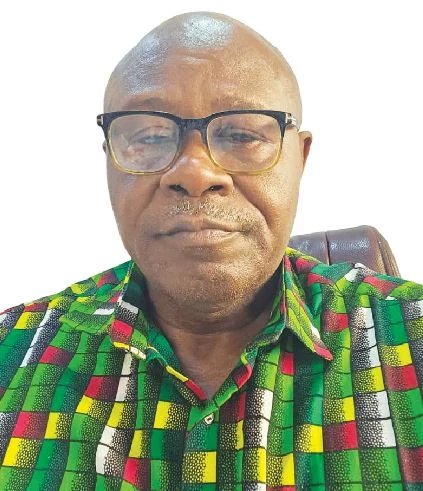
Spokesperson for the Nigeria Labour Congress, Benson Upah, speaks with DARE AKOGUN on why organised labour believes Nigerian workers deserve a minimum wage of N1m, the impact of President Bola Tinubu’s economic reforms, among other issues
You recently argued that Nigerian workers deserve a minimum wage of N1m rather than the N100,000 being considered by governors. How did the NLC arrive at that figure, and what economic assumptions underpin your calculation?
The argument is rooted in the realities confronting Nigerian workers today. When you examine the combined effects of fuel subsidy removal, exchange-rate liberalisation, tariff hikes, increased taxation, and the growing debt burden, it becomes clear that workers have suffered a dramatic decline in purchasing power.
In less than three years, fuel prices have risen by over 600 per cent. Electricity tariffs have increased by more than 260 per cent for certain categories of consumers. Telecommunications tariffs have also gone up significantly.
The naira has depreciated sharply, pushing the exchange rate to levels unimaginable a few years ago. Every one of these policies directly affects the cost of transportation, housing, food, healthcare, education, and other essentials.
At the same time, government revenues have increased substantially. What is shared through the Federation Accounts Allocation Committee has risen from approximately N700bn monthly to over N2tn. Government officials themselves acknowledge that these reforms have expanded fiscal revenues.
So, on one side, workers have been impoverished by policy choices. On the other hand, the government has become wealthier. The issue, therefore, is not the capacity to pay. The issue is whether the government is willing to prioritise workers.
The N1m figure reflects what many workers would require to maintain a basic standard of living in today’s economy. Workers now pay prices for many goods and services comparable to what obtains in advanced economies. It is only fair that wages should move in the same direction if workers are expected to survive with dignity.
The current minimum wage of N70,000 was approved less than two years ago. What does its rapid erosion tell us about the state of Nigeria’s economy and inflation management?
It tells us that the economy remains extremely fragile and vulnerable. When a newly negotiated minimum wage loses a substantial portion of its value within such a short period, it is evidence that inflation is outpacing income growth. Workers negotiated N70,000 in good faith, but inflation has significantly reduced its purchasing power.
The challenge goes beyond inflation figures. We have witnessed job losses, business closures, weak industrial expansion, and declining consumer demand. Manufacturers have repeatedly complained about unsold inventories because consumers no longer possess sufficient disposable income.
When people cannot afford goods and services, businesses struggle. When businesses struggle, jobs are lost. It becomes a vicious cycle.
What this suggests is that macroeconomic indicators may look impressive on paper, but they are not translating into meaningful improvements in the lives of ordinary Nigerians.
Some state governments have consistently argued that they struggle to pay existing wage obligations. How realistic is a substantial wage increase when several states still depend heavily on federal allocations?
Governors who genuinely struggle often do so because of poor governance choices. Some states have become excessively dependent on federal allocations without developing any internal economic capacity. Others operate bloated political structures while treating workers’ welfare as a secondary concern.
A governor who prioritises governance, promotes investment, supports local enterprise, and manages resources prudently can create room for better remuneration for workers. Workers should not become victims of official inefficiency.
The truth is that many states have received significantly higher allocations following recent reforms. Therefore, the argument of incapacity cannot be accepted wholesale without examining how public funds are actually being utilised.
You referenced increased FAAC revenues. Do you believe governments have deliberately failed to translate higher revenues into improved welfare for workers?
Yes, to a significant extent. The first issue is that Nigeria’s reward system is fundamentally skewed against workers.
We operate a system where political officeholders have separate mechanisms for determining their remuneration, while workers must constantly struggle for wage adjustments.
Secondly, governments often exploit this imbalance to their advantage. Thirdly, many policymakers fail to appreciate the economic benefits of better wages. Higher wages stimulate demand, boost consumption, support businesses, and encourage productivity.
Finally, there appears to be a deliberate preference for keeping workers at the margins. If workers are truly recognised as critical stakeholders in economic growth, wage policies would reflect that reality.
Three years after President Bola Tinubu assumed office, how would you assess the administration’s economic policies from the perspective of the average Nigerian worker?
The answer depends on where one stands ideologically. Those who subscribe to orthodox market economics argue that President Tinubu’s reforms were necessary and have improved macroeconomic fundamentals. International rating agencies and financial institutions have acknowledged some of those improvements.
However, from the standpoint of workers and ordinary citizens, the experience has been profoundly difficult. The policies have generated unprecedented hardship. The cost of transportation, food, healthcare, rent, and education has increased dramatically.
Even supporters of the reforms admit that the social costs have been severe. The central question remains whether the gains eventually promised by these reforms will outweigh the pain already inflicted on millions of Nigerians. Our position is that things could have been handled differently and more humanely.
The Federal Government maintains that difficult reforms such as fuel subsidy removal and exchange-rate liberalisation were necessary to prevent economic collapse. Does the NLC accept that argument, or do you believe alternative approaches were available?
Economic reforms are sometimes necessary. No serious observer disputes that. The real issue is implementation. History offers many examples of governments introducing reforms while simultaneously protecting vulnerable citizens.
President Tinubu’s reforms arrived in rapid succession. Subsidy removal, currency devaluation, tariff adjustments, and tax increases came almost simultaneously. The burden fell disproportionately on ordinary Nigerians.
Furthermore, the government appeared more interested in penalising victims than addressing systemic corruption. In the fuel subsidy regime, for instance, many Nigerians expected stronger action against those who profited from fraud and inefficiencies.
The interventions introduced to cushion the impact have simply not matched the scale of the hardship. There were alternatives. Reforms could have been phased in, better targeted, and accompanied by stronger social protection measures.
What would you identify as the single biggest challenge facing Nigerian workers today — low wages, inflation, taxation, unemployment, or declining public services?
All these challenges are interconnected. Inflation erodes wages. Low wages weaken purchasing power. Unemployment creates insecurity. Declining public services force workers to spend more on healthcare, education, and transportation. If I must identify a central issue, however, it is the collapse of purchasing power. Workers are earning salaries that no longer correspond with the realities of the market.
Beyond increasing salaries, what specific measures should governments at all levels implement to restore the purchasing power and living standards of Nigerian workers?
The government must prioritise investment in productive sectors. The economy requires a more supportive environment for manufacturing, agriculture, technology, and small businesses.
Businesses need incentives to expand and create jobs. Infrastructure must improve. Energy costs must come down.
The government should also focus on strengthening public education and healthcare so workers are not forced to shoulder these costs privately.
Most importantly, there must be a deliberate effort to curb waste and the organised looting of public resources. Economic growth becomes meaningful only when it improves the lives of citizens.
Recent tax reforms have generated mixed reactions. How do you assess the impact of the new tax regime on workers, particularly those in the lower and middle-income brackets?
Workers are already carrying an enormous burden. While tax reform is important, taxation must not become another instrument for reducing disposable income among struggling households.
The concern is that many Nigerians are paying more, both directly and indirectly, without receiving corresponding improvements in public services. Tax policy should be progressive. Those with greater capacity should bear a larger share of the burden. The objective should be to stimulate economic activity, not suppress household consumption.
Labour unions have often argued that wages should be tied to the cost of living. Should Nigeria adopt an automatic wage adjustment mechanism linked to inflation rather than waiting for periodic negotiations?
Many countries already operate systems that adjust wages periodically based on inflation and cost-of-living indicators. There are arguments for and against such mechanisms. In Nigeria, we previously operated a five-year review cycle before moving to a three-year cycle.
What matters most is ensuring that wages retain their value. Workers should not have to wait years for relief while inflation continuously erodes their earnings.
Critics argue that continually increasing wages without corresponding improvements in productivity could worsen inflation. How does the NLC respond to concerns that higher wages may fuel further price increases?
That argument is often overstated. Among the drivers of inflation, wages represent one of the least significant factors in Nigeria. Energy costs, exchange-rate volatility, transportation expenses, supply-chain disruptions, insecurity, and policy uncertainty play much larger roles.
Moreover, businesses also suffer when workers lack purchasing power. A worker who cannot afford basic necessities is unlikely to contribute meaningfully to economic growth. The economy functions best when citizens possess sufficient income to participate actively in the marketplace.
What is your assessment of job creation under the Tinubu administration, particularly in sectors that traditionally absorb large numbers of young Nigerians?
To the administration’s credit, there has not been large-scale retrenchment of public-sector workers. That continuity deserves recognition. However, job creation remains a significant challenge.
Nigeria requires millions of new jobs annually to accommodate its growing youth population. The available evidence suggests that employment growth has not matched the scale of demand. The private sector, which should be the engine of job creation, continues to face considerable operational challenges.
Many young Nigerians are leaving the country in search of better opportunities abroad. How concerned is the NLC about the impact of the ‘Japa’ phenomenon on Nigeria’s workforce and economic future?
The phenomenon presents both opportunities and challenges. The negative aspects are obvious. Nigeria loses highly trained professionals in critical sectors such as healthcare, engineering, and education.
However, the success of Nigerians abroad also demonstrates the quality of our human capital. Diaspora remittances contribute significantly to the economy.
The challenge for the government is to create conditions that make staying in Nigeria an attractive option while simultaneously expanding educational opportunities to produce enough skilled professionals for both domestic and international markets.
Looking ahead to the remaining years of the Tinubu administration, what concrete policy actions would convince organised labour that the government is genuinely committed to improving workers’ welfare?
The government must fundamentally change its attitude towards labour. Labour should be treated as a partner in national development rather than an adversary. There should be greater respect for collective bargaining, labour rights, and democratic freedoms.
The government should stop criminalising legitimate labour actions and create a framework for genuine social dialogue. Beyond rhetoric, workers must see measurable improvements in wages, working conditions, healthcare access, transportation, housing, and social protection.
The relationship between government and labour should be based on mutual respect and shared national objectives.
If you were to give President Tinubu a scorecard on workers’ welfare, cost of living, employment, and economic management after three years in office, what score would you give him and why?
On balance, I would give him 40 per cent. The reality is that workers have been living on a shoestring. Government officials often argue that difficult decisions were inherited from previous administrations. While there may be some truth in that, leadership is ultimately judged by outcomes.
Great leaders are remembered not for the challenges they inherited but for the solutions they implemented. President Tinubu himself indicated that he would continue many aspects of the previous administration’s policies. Therefore, responsibility for the consequences of those policies must also be accepted.
The administration still has time to improve its standing with workers, but that will require deliberate action aimed at reducing hardship, expanding employment opportunities, and restoring purchasing power.