
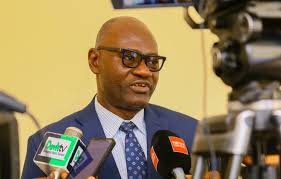
The Director-General of the Institute for Peace and Conflict Resolution, Dr Joseph Ochogwu, has warned political actors against exploiting economic hardship, misinformation and public discontent to provoke violence ahead of the 2027 general elections.
He also called for what he described as the de-weaponisation of hunger, warning that the rising cost of living and inflation could be manipulated by political interests to mobilise public anger and deepen divisions.
Ochogwu gave the warning on Thursday in Abuja during a meeting with the United Nations Special Representative of the Secretary-General, Leonardo Simão, who visited Nigeria as part of a pre-election assessment ahead of the 2027 polls.
The discussions focused on Nigeria’s preparedness for the elections and measures to prevent violence before, during and after the exercise.
The two officials examined potential threats to electoral peace, including political violence, election-related tensions, misinformation, disinformation and the growing influence of technology in shaping political narratives.
In his remarks, Ochogwu expressed confidence in the capacity of the Nigerian state to prevent and manage election-related violence, saying the country’s law enforcement agencies, military and intelligence services had the institutional capacity to respond to threats.
He, however, stressed the need to strengthen existing early-warning, prevention and response mechanisms to ensure that isolated incidents did not escalate into widespread violence.
On the country’s economic situation, the IPCR director-general noted that “opposition parties could exploit the hardship confronting Nigerians, including inflation and the rising cost of living, to mobilise public anger against the government”.
He also urged the government to acknowledge the impact of economic difficulties on citizens and sustain measures to cushion their effects.
Ochogwu warned that “turning economic hardship into a political weapon could aggravate social tensions and transform legitimate grievances into instruments of conflict”.
He identified misinformation, disinformation and malinformation, particularly on social media, as other threats to the credibility and peaceful conduct of the 2027 elections.
According to him, technological advances have created opportunities for the manipulation of public opinion through false information, misleading narratives and potentially foreign-influenced content capable of heightening political tensions.
He called for “vigilance among political parties, security agencies, civil society organisations and technology platforms to prevent digital spaces from being used to destabilise the electoral process”.
The IPCR chief also cautioned against political rhetoric capable of undermining democratic institutions, urging political actors to avoid presenting electoral contests as struggles in which opposing sides must destroy one another.
He advocated conciliatory politics and greater accommodation among competing interests, stressing that both the ruling party and the opposition had responsibilities to maintain a peaceful political environment.
Ochogwu urged political parties to ensure that their supporters avoided inflammatory statements, violence and other actions capable of threatening the electoral process.
He further stressed that the responsibility of political actors extended beyond election day, noting that stability after the polls was necessary for effective governance and the proper functioning of democratic institutions.
He said political competition should give way to governance, reconciliation and national development after elections.
Simão’s engagement with the IPCR leadership formed part of wider consultations with Nigerian stakeholders on the country’s preparedness for the 2027 general elections.