
At least 3,108 Nigerians have returned home from Sudan since civil war erupted in the North African country in April 2023, Sunday has learnt.
The figure is based on verified evacuation records from the Federal Government and the International Organisation for Migration, highlighting one of Nigeria’s largest emergency repatriation exercises in recent years.
Data obtained from the Nigerians in Diaspora Commission, the Ministry of Humanitarian Affairs and IOM Nigeria showed that the return operation was initially executed through an emergency government-led evacuation in the early weeks of the conflict before transitioning into a phased humanitarian return programme coordinated by the IOM.
The Federal Government evacuated no fewer than 2,518 Nigerians through 15 special flights between April and May 2023.
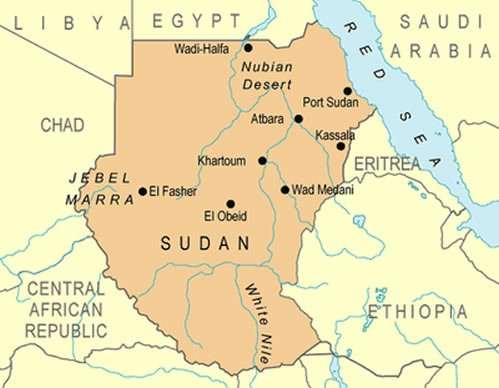
Of the flights, four departed from Aswan in Egypt while 11 departed from Port Sudan after thousands of stranded Nigerians, many of them students, endured difficult journeys through conflict zones to reach designated evacuation points.
The final batch of evacuees arrived at the Nnamdi Azikiwe International Airport, Abuja, on May 13, 2023.
At the height of the operation, then Minister of Foreign Affairs, Geoffrey Onyeama, disclosed that the Federal Government spent at least $1.2m on the evacuation exercise.
The cost included the procurement of 40 buses used to transport Nigerians overland to the Egyptian border at a cost of about $30,000 per bus, as well as exit charges imposed by Egyptian authorities.
The Chairman/CEO of the Nigerians in Diaspora Commission, Abike Dabiri-Erewa, had at the time confirmed that no Nigerian casualty was recorded during the evacuation exercise.
However, about 160 women and children whose Nigerian nationality could not immediately be verified were temporarily held back for profiling by officials of the Nigerian Embassy in Khartoum.
Although the emergency evacuation exercise was largely concluded by May 2023, the situation in Sudan deteriorated significantly in the months that followed.
Many Nigerians who missed the initial evacuation exercise or chose to remain in Sudan later found themselves trapped as violence spread beyond Khartoum into other regions, including Darfur and Kordofan.
To assist those still stranded, the International Organisation for Migration launched a Voluntary Humanitarian Return programme targeted at vulnerable migrants and foreign nationals seeking to leave the country.
According to the IOM, four chartered flights have so far evacuated 590 Nigerians from Sudan.
The organisation said 425 Nigerians were airlifted in three separate tranches in 2025, while another 165 returned in 2026.
Most of the returnees were students whose academic programmes were disrupted by the war, elderly persons, and individuals who lost their sources of livelihood as economic activities collapsed across parts of Sudan.
Combined with the 2,518 Nigerians evacuated by the Federal Government in 2023, the total number of Nigerians returned from Sudan has risen to at least 3,108.
However, officials familiar with the evacuation efforts told Sunday that the actual figure could be higher when self-sponsored returnees and undocumented departures are taken into account.
The IOM disclosed that returnees received various forms of post-arrival assistance upon arrival in Nigeria.
These included medical care, counselling services, mental health and psychosocial support, temporary transportation assistance and reintegration programmes aimed at helping them rebuild their lives.
The organisation said some returnees also benefited from entrepreneurship and business development training designed to support economic reintegration.
Despite recent reports of voluntary returns to some parts of Sudan, humanitarian agencies warn that conditions remain extremely fragile.
According to the IOM, nearly four million people had returned to parts of Sudan, particularly Khartoum and Aj Jazirah State, as of April 21, 2026.
However, many returnees are reportedly finding destroyed homes, damaged infrastructure and severely limited access to essential services.
Despite the successful evacuation of thousands of Nigerians, the exact number of citizens still residing in Sudan remains unclear.
Responding to enquiries by Sunday , IOM Senior Communications Assistant, Elijah Elaigwu, said obtaining an accurate figure remained difficult due to the fluid security situation and access constraints.
“Unfortunately, at this time, there is no precise or verified figure for the number of Nigerians still in Sudan who may have declined assistance or remain unreached,” he said.
“The situation on the ground remains highly fluid, and access constraints in different parts of the country make comprehensive verification challenging.”
The uncertainty underscores the continuing risks facing foreign nationals in Sudan as the conflict enters its third year with no immediate end in sight.
The Sudan war erupted on April 15, 2023, following a bitter power struggle between the head of the Sudanese Armed Forces, General Abdel Fattah al-Burhan, and the commander of the Rapid Support Forces, General Mohamed Hamdan Dagalo, popularly known as Hemedti.
What initially began as clashes in Khartoum quickly escalated into a nationwide conflict, drawing international concern and creating one of the worst humanitarian emergencies in recent history.
The conflict has devastated infrastructure, crippled public services, disrupted education and healthcare systems, and displaced millions of Sudanese citizens and foreign nationals.