
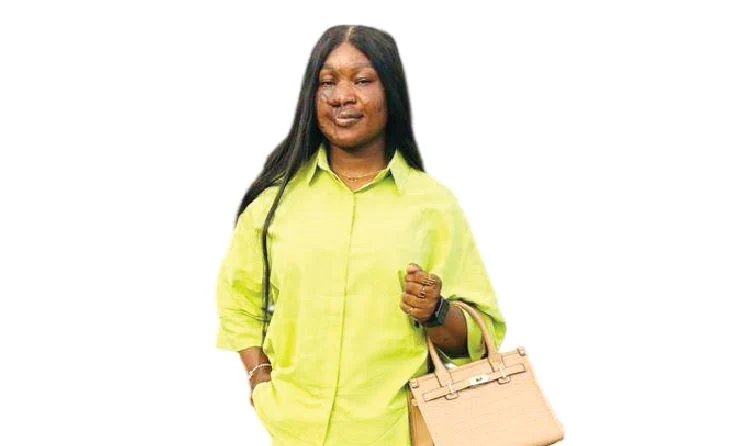
A corps member, Peace Bassey, speaks with TEMITOPE ADETUNJI about her near-fatal electric shock in 2015 that left her with a disability and reshaped the course of her life
You made a TikTok post about surviving an incident that could have been fatal and how it eventually led to your disability. Could you walk us through your journey and how everything unfolded?
The incident that led to my disability happened on June 1, 2015. I can still remember that day so clearly. It started like every other normal day. I woke up early, got ready, and headed to work without the slightest idea that my life was about to change forever.
At the time, I was working with a company that sold fairly used phones, so I resumed work as usual that morning. Earlier that day, I noticed that officials of a power distribution firm had come to the company to fix an electrical issue. Everything seemed normal, and business continued as usual, but within seconds, everything changed.
What changed?
Before I even understood what was happening, I suffered a serious electric shock. The shock was so severe that I lost control immediately. It felt like my entire body was on fire. Everything became blurry. That single moment changed the course of my life.
According to what I was told, the power distribution company had restored power supply, and it was only by God’s grace that I survived. I was taken to several hospitals, but they all declined. Eventually, I was taken to the National Orthopaedic Hospital, Igbobi, Lagos.
When I eventually regained consciousness after two days of lying lifeless, I found myself in the hospital, surrounded by worried faces and unbearable pain. At first, I did not fully understand the extent of the damage.
The doctors kept trying to save me while my family prayed endlessly for my survival. It was one of the darkest periods of my life.
What was the reaction of people, your family and friends, when you came out of the hospital?
Since the accident, I believe God has surrounded me with people who are understanding and compassionate. I have been fortunate in that regard; my family has been kind to me. I come from a polygamous family. From my mother’s side, I am the second child.
One person I cannot forget is my friend at the time. Whenever she went to work and I was left at home alone (I wasn’t living with my parents), I often wondered how she managed everything so calmly and selflessly.
I still don’t fully understand how she did it. I believe she even made arrangements for people to keep an eye on me while she was away. I am truly grateful to her, and I pray God continues to bless her.
There was a period when I kept struggling emotionally, but she remained patient with me throughout. I remember a particular day very clearly; it was a turning point for me.
I made a firm decision that I could not continue living my life in that broken state. Something inside me shifted that day, and I decided I needed to start embracing life again, step by step, no matter how difficult it seemed.
How have you been able to cope emotionally and physically with the aftermath of the accident?
Coming to terms with my disability was not easy at all. I struggled emotionally, mentally, and physically. There were days I cried endlessly and kept asking myself, ‘Why me?’ I thought about the life I used to have, the dreams I had, and how suddenly everything had changed. Watching other people do simple things I could no longer do broke me many times.
But despite the pain, I am still here. The journey has taught me strength, patience, and resilience in ways I never imagined. Although my life changed because of that accident, I have continued to fight every day to find purpose, hope, and the courage to move forward.
It was a very terrible experience because the electric shock severely damaged several parts of my body. My face was badly affected, along with my head, back, hands, and nose. The injuries were so serious that I had to endure intense pain and a long period of treatment and recovery.
How old were you when you had this accident?
I was in my early twenties when it happened.
Did you ever experience mockery, rejection, or discrimination because of your appearance?
Yes, I did. Months after the incident, my boss still took me back to work, so I continued working with him.
However, at the beginning, I was very shy about going out because of my face and my mouth. There were days I would use a handkerchief to cover my mouth on my way to work, just to feel a little more comfortable and less exposed.
At work, I also had to deal with customers who were sometimes very rude. Whenever they came to get something from us, some of them would speak to me harshly or act in a disrespectful way. Over time, it became emotionally exhausting.
At some point, I struggled to cope with their attitude towards me. And whenever I tried to respond or defend myself, it often made things worse; they would bully me and call me all sorts of hurtful names.
I would get home at times and cry my eyes out. It was an extremely difficult and painful period for me. At some point, I became deeply depressed, and I even struggled with suicidal thoughts.
I felt overwhelmed and like I could no longer go on. There was a particular moment when I tried to get Sniper from someone, but the trader refused to sell it to me. Looking back, I believe he might have sensed what I intended to use it for.
Did you eventually leave your workplace after the incident?
Not really. After the electric shock, I still continued working there till my service year, meaning I was combining work with school. When I gained admission into Kwara Polytechnic, I would only go to work during holidays.
What kept you going during the darkest moments of your life?
I believe God has a purpose for my life because, honestly, many people might not have survived what I went through. That awareness alone keeps me grounded and grateful every single day.
I also felt strongly that God had given me a second chance at life, and I did not want to take that grace for granted or misuse it. That realisation became a turning point for me. It pushed me to focus on rebuilding my life instead of dwelling on what I had lost.
That was what motivated me to return to school and continue my education despite everything. I obtained my ND at LASPOTECH and later my HND at Kwara State Polytechnic, where I studied Business Administration. Right now, I am currently serving, and I see it as another step in my journey of growth, healing, and purpose.
Do you sometimes wish the accident never happened?
Yes, there are moments when I think about it and wish it never happened. It’s a very human feeling, especially when I remember how my life used to be before the accident.
But at the same time, I also try not to stay in that feeling for too long. The accident changed a lot for me, especially with the damage to my face, my head and mouth, and there are days it still affects my confidence and emotions deeply.
However, I’ve also come to accept that I cannot change what happened. So instead of allowing that thought to break me, I try to focus on how I can keep moving forward and making meaning out of my life despite everything.
What has this experience taught you about life?
This experience has taught me that life is extremely fragile and unpredictable. Anything can happen at any moment; one minute you are healthy, active, and going about your normal routine, and the next moment everything can change completely because of an accident or an unexpected event.
It has made me realise that we should never take life for granted or assume we have control over everything. Things can shift in seconds, and nothing is guaranteed.
More importantly, it has taught me to value each day and appreciate the gift of life itself, no matter the condition I find myself in. Even in pain and struggle, I’ve learnt that there is still purpose, and there is still something to hold on to.
Do you think society places too much value on physical appearance, especially for women?
Yes, I believe society places a lot of value on physical appearance, especially when it comes to women. People are often judged by how they look before anyone even tries to know who they truly are.
After the accident, I experienced this reality firsthand. The way some people looked at me or treated me changed because of my appearance. There were moments I felt misunderstood, and it affected my confidence deeply.
But going through this journey also taught me that beauty is far beyond physical appearance. A person’s character, strength, kindness, and resilience matter so much more. I have learnt that scars or physical differences do not reduce a person’s value or humanity.
I think society needs to become more compassionate and less focused on outward appearance because anyone’s life can change in an instant. What truly matters is how we treat people and the kind of heart we have.
Has your experience affected your relationships or the way people relate with you emotionally?
Yes, it has affected my relationships in different ways. Before the accident, I was already in a relationship. At first, he tried to show care and support in his own way, but as time went on, I noticed he gradually started withdrawing emotionally. Eventually, it became difficult for me to keep holding on, and I decided to walk away from the relationship.
At the moment, I am in a relationship, and that experience has also taught me something important: people living with disabilities are still deserving of genuine love, care, and companionship. A lot of people assume that once you have a visible disability or facial difference, finding love becomes impossible, but I do not believe that is true.
I believe confidence, self-worth, and the way you carry yourself also matter. Most importantly, I believe everyone deserves to be loved and accepted for who they are beyond physical appearance.
How do you cope with criticism or negative comments you receive on social media?
I have grown beyond the point where I allow people to bully me or say hurtful things to me. Over time, I’ve learnt to build confidence and protect my peace.
At this stage of my life, I try not to let negative comments affect me the way they once did. However, I also believe in standing up for myself. If someone says something unkind or disrespectful to me, I no longer just take it in silence; I respond appropriately and assert myself when necessary.
Overall, I’ve learnt to be more confident, emotionally strong, and less affected by people’s opinions.