
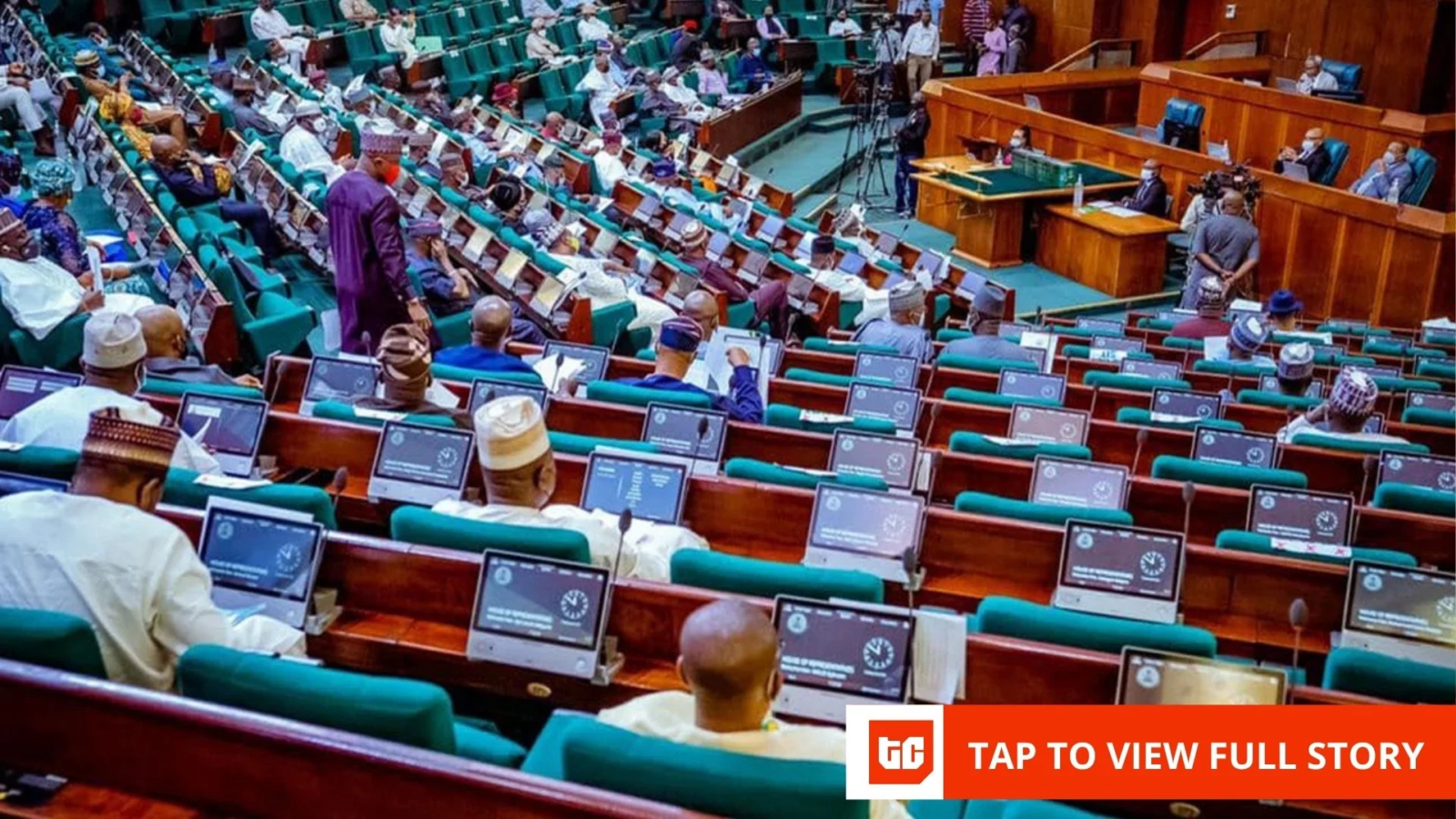
Nigeria’s biggest telecom operators have sued the House of Representatives, challenging its constitutional authority to investigate their network quality and compel their chief executives to appear before lawmakers.
In an originating summons filed at the Federal High Court in Abuja on November 4, 2026, and seen by TechCabal, the Association of Licenced Telecommunications Operators of Nigeria (ALTON), MTN Nigeria, Airtel Networks, Globacom and Emerging Markets Telecommunication Services, operator of T2 Mobile, ask the court to interpret Sections 88 and 89 of the Nigerian Constitution, which define the National Assembly’s investigative powers.
At the heart of the dispute is whether lawmakers can use those powers to compel private telecom operators to account for network quality, or whether such an investigation crosses constitutional boundaries and encroaches on the regulatory mandate of the Nigerian Communications Commission (NCC).
The case could establish how far parliamentary oversight extends over private companies in a heavily regulated industry, and where the National Assembly’s authority ends, and the NCC’s begins. The telecom operators ask the court to determine whether the House’s investigative powers are “limited to the purposes prescribed under Section 88(2)” of the Constitution, which include lawmaking and exposing corruption, inefficiency or waste in the administration of laws and management of public funds appropriated by the legislature.
The companies argue that they are private entities that neither administer laws enacted by the National Assembly nor manage funds appropriated by it. They want the court to determine whether the House can investigate their service quality under those circumstances.
The immediate trigger was a series of summonses dated October 29, requiring the chief executives of the companies to appear before the House Ad Hoc Committee on Telecommunications Quality of Service and produce documents. The operators are also challenging the threatened use of arrest warrants to compel attendance.
Their suit asks the court to declare that the summonses constitute an “invalid and unconstitutional exercise” of the House’s investigative powers, and to restrain lawmakers from enforcing them or issuing arrest warrants against the executives.
Divided authority
The operators’ second major argument concerns the division of responsibilities between lawmakers and the NCC, which regulates the telecommunications industry under the Nigerian Communications Act 2003.
The originating summons asks whether the House can investigate service quality in a manner that “assumes, duplicates or interferes with” the commission’s statutory regulatory functions. It cites the Nigerian Communications Act and the 2024 Quality of Service Regulations, which assign the NCC responsibility for establishing, monitoring, and enforcing service standards.
The telecom operators argue that the National Assembly should exercise its oversight powers within the constitutional purposes prescribed for legislative investigations and cannot be used to assume functions assigned to a specialised regulator.
The House, however, has defended its authority to investigate the operators. Lawmakers argue that the NCC’s existence does not shield telecom companies from parliamentary scrutiny, particularly when the regulator operates under legislation enacted by the National Assembly.
At a November 4 committee meeting, lawmakers maintained that each operator holds an individual licence and must account for its own performance. They rejected the appearance of ALTON representatives, insisting that the summonses were directed at the companies and their chief executives, not the industry association.
The competing positions expose a fundamental disagreement over whether the House is investigating the implementation of existing laws and policies or directly scrutinising the operational performance of private companies under a regulatory framework.
An earlier confrontation
The lawsuit is an escalation of a confrontation that began before the operators approached the court.
On October 21, the House committee invited telecom executives to explain persistent complaints about dropped calls, poor internet connectivity, failed airtime and data transactions, and inadequate network coverage. After the executives failed to appear at an October 28 hearing, lawmakers demanded their personal attendance on November 4 and threatened arrest warrants for further non-compliance.
The telecom operators subsequently sought to appear through ALTON, arguing that the association could represent its members. The committee rejected that arrangement, maintaining that individual companies must answer for their operations and obligations to subscribers.
There is also an older legal dispute. ALTON reportedly filed a separate suit in 2018 challenging repeated legislative summonses over matters it considered to fall within the NCC’s regulatory jurisdiction. That case remains pending, according to published accounts. The new filing also asks the court to consider whether the current investigation could interfere with related proceedings involving telecom operators.
The dispute comes amid growing consumer complaints over poor network quality. In October, the NCC said operators had compensated 75 million subscribers for poor service in 2026, while nearly three million received refunds for failed airtime and data transactions. It also reported more than 6,500 network interventions during the year. Yet consumer complaints remain substantial.