
Across Nigeria, the once-thriving football viewing centres that turned ordinary nights into communal celebrations are steadily fading into silence due to rising fuel prices, costly pay-TV subscriptions, and the growing shift to mobile streaming eroding patronage, AYOOLA OLASUPO reports
Ten years ago, Jide Ojo’s football viewing centre was a lively hub where football lovers gathered to watch their favourite teams battle on the pitch, but today, the story is different.
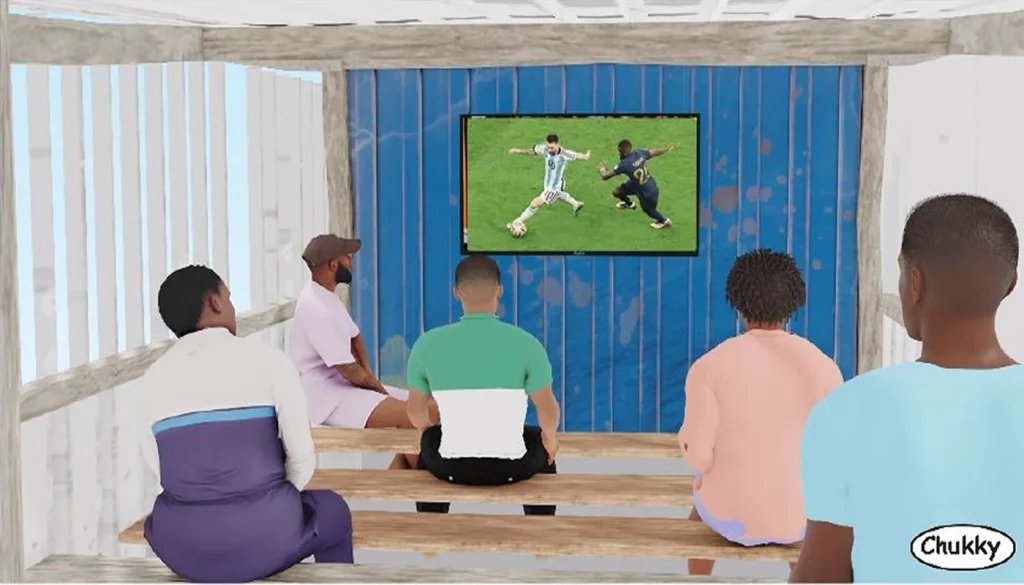
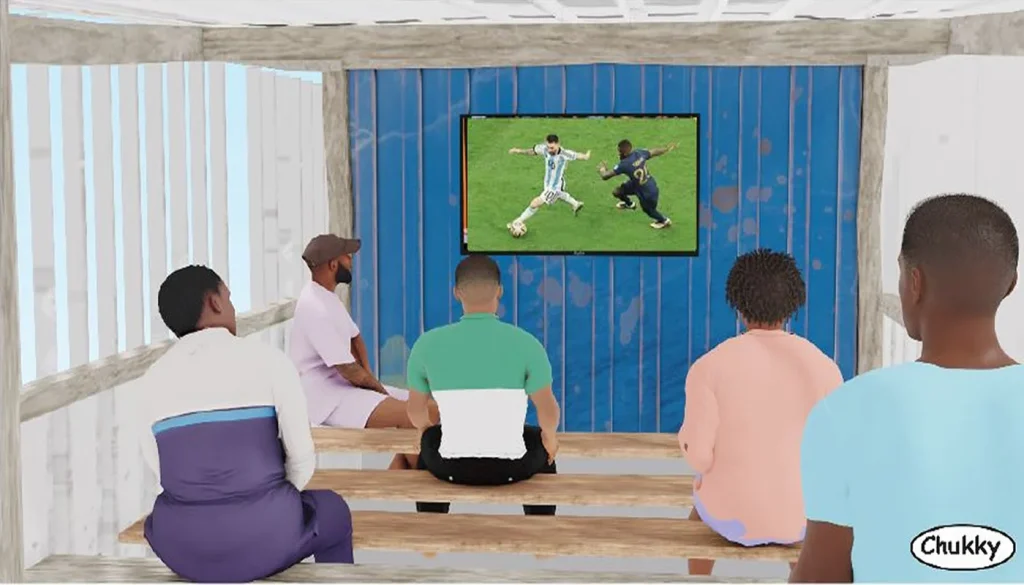
Inside his viewing centre in Ibafo, Ogun State, wooden benches were neatly arranged in rows before three television screens mounted on a wall. They stand as silent reminders of a time when finding a seat at Ojo’s football viewing centre was nearly impossible.
On match days, football lovers would arrive long before kick-off, eager to secure a spot among fellow fans. The atmosphere was usually electric, as fans bantered with one another over which team was the best.
Oftentimes, cheers would erupt with every goal scored, and arguments broke out over controversial referee decisions. Then, it was a moment when strangers became friends, united by their love for the game.
But today, everything has become a shadow of itself. The chairs now remain empty, and the once-vibrant voices of football lovers have faded over time.
Speaking to Saturday about the current situation, Ojo’s voice carried a mixture of nostalgia and disappointment.
He said, “When I started, I could get an average attendance of about 20 people. But now, attendance has dropped to a very low level. The difference is much if you compare it to the past.”
For the 10 years Ojo has spent running the viewing centre, football has been more than a business but a passion, a way of bringing people together, and his viewing centre has been a place where the excitement of the English Premier League and the UEFA Champions League transforms ordinary evenings into communal celebrations.
But the economic realities of recent years have turned that passion into a daily struggle. Before every match, Ojo now faces a familiar calculation whether the handful of people likely to attend will generate enough money to cover the cost of fuel, electricity, and television subscriptions.
Asked how much it now costs to keep the business running, he said, “The difference is huge. If you compare it to the past, it is a huge amount.”
Fuel and subscription costs
Fuel, which is one of the business’s biggest expenses, according to the Ogun-based operator, has become a relentless burden because a few years ago, he could purchase petrol for about N124 per litre before it climbed to around N500, and currently more than N1, 300 per litre.
For a business that relies heavily on generators to provide uninterrupted electricity during matches, the increase has been devastating.
He lamented that to attract football fans, viewing centres must subscribe to premium sports channels, but the costs of maintaining access to live matches have risen beyond anything he imagined when he started the business.
“Another challenge is subscription costs. If you check the subscription rates from DStv, you’ll see a huge increase. Two years ago, we were paying around N13, 900 for Premium and about N3, 500 for Extra View.
“But now, if you want to subscribe to DStv Premium with Extra View, you’re paying around N52, 000. The difference is very, very high. These are some of the challenges we are facing. Because of the increase in expenses, we used to charge below N100 per match in the past, but now we charge N400,” Ojo added.
Back then, Ojo could earn as much as N10, 000 in profit from a single fixture after deducting all expenses. Today, even charging four times more than he did years ago, the crowds no longer come.
His monthly profit now averages between N40, 000 and N45, 000 before maintenance costs and other expenses are deducted.
Recounting a similar experience, Ezekiel Adenekan, whose centre is located in Agege, Lagos State, said, “There was a time when people used to come here hours before matches to reserve seats. Now the chairs are empty, and I barely get customers,” he said.
The biggest heartbreak for Adenekan was not merely the rising cost of fuel, electricity, and television subscriptions, but the decline in patronage that has transformed his once-thriving business.
He said, “Before, my profits in a month used to range between N100, 000 and N200, 000, but it has drastically dropped even below N50, 000 now. And that is because of the rising cost of operation. We have to pay for subscriptions, buy fuel, pay for electricity, and even service the generator.
“What pains me most is not just the rising costs but seeing a place that was once full of life becoming so quiet. We used to struggle to find enough seats for people before, but it is no longer like that now. I even struggle sometimes to get 15 people to fill the seats.”
Another operator, Aliyu Abu, in the far north, corroborated that there was a time in Kano State when football fixtures drew large crowds from surrounding communities.
“Here in Kano, there was a time when every big match would pull crowds from the community, and people would come early just to secure a seat and join the excitement. But now, even on Champions League nights, you can count the viewers on your fingers.
“It pains me because this place used to be full of life, noise, and energy. Today, I find myself setting up chairs for a crowd that no longer comes,” Abu said.
‘Why we closed down centres’
While many of the operators are still struggling with the business, some have already given up on the situation.
In Ibadan, for instance, a former viewing centre operator, Habeeb Oladehinde, said he was forced to shut down the business shortly before the commencement of the English Premier League in 2025, after years of struggling with rising operational costs and dwindling patronage.
According to him, the business was once profitable and attracting between 150 and 200 viewers, especially during major football fixtures.
On good weekends, he added, the profits could rise between N30, 000 and N65, 000 after deducting expenses, making the venture a reliable source of income.
However, the situation changed for him as fuel prices surged from N100 to N1350 per litre, and a DStv premium subscription increased to N44, 500 from the previous N29, 500 in early 2024.
“By the time I closed, even Champions League matches had started having fewer than 20 people despite charging N400 per head. There were days my total revenue was barely N8, 000, yet I spent more than N10, 000 on fuel, electricity, and subscriptions on a match day. The numbers just stopped making sense to me, so I had to close down the business,” Oladehinde added.
Another former operator in Abia State, Ifeanyi Uchendu, noted that the collapse of his business was driven by rising operational costs and more by the decline in patronage.
He recalled that around 2016, his viewing centre attracted more than 100 regular customers, while matches involving clubs such as Manchester United, Arsenal, and Chelsea consistently drew full crowds.
But by 2024, attendance had fallen by more than 85 per cent, with some match days attracting even less than 10 viewers.
Uchendu said, “The biggest problem was when I took a loan of N500, 000 to fund the business. Unfortunately, the business sent me back to my village because I could not pay back the money. Even after increasing the viewing fee from N100 to N300 and later N500, my profits continued to fall because the crowd suddenly disappeared.
“Many fans switched to watching matches on their phones, so I was left with almost nothing. I had invested all the N500, 000 in the business, but I eventually had to shut it down because it was no longer giving me money, and I kept running into debts.”
Security and convenience
Through the use of smartphones, cheaper streaming options, and improved internet access, football culture has been reshaped, as fans now prefer to watch matches on their mobile devices from the comfort of their homes or workplaces.
A football fan, Olakunle Abdulmalik, said security concerns and the current situation in the country are mainly the factors that kept him away from viewing centres, especially for night matches.
He explained that he would rather stay at home to watch games on his phone at night than risk going out late, attributing the change in his habits to rising rates at viewing centres.
“What I miss most is the atmosphere, the crowd, the noise, the excitement, and everything that comes with watching football with other fans, especially the banter. That is something you don’t get when watching alone on your phone,” Abdulmalik added.
A football fan, Segun Ibrahim, told Saturday that he now spends about N11, 000 monthly on data to stream matches, using approximately 1Gigabyte per game, and occasionally joins friends at sports lounges for major fixtures due to safety and comfort considerations.
As he did during the final match of the 2025/2026 UEFA Champions League, he also hopes to watch the finals of the World Cup at a sports lounge.
Speaking with Saturday , a Professor of Sociology at Bayero University, Kano State, Fagge Aminu, explained that football centres bring together football fans of different ages and backgrounds to share opinions, engage in banter, and collectively experience matches, creating a strong culture of belonging and identity around football clubs.
Aminu said, “Beyond entertainment, they serve as a social outlet where both young and older members of the community can relieve stress and temporarily escape the pressures of daily life. They also provide a sense of identity and belonging, where people form informal groups or fan clubs that meet to interact and socialise.
“In this way, viewing centres have built a strong culture of engagement around football, where fans openly express loyalty to clubs, sometimes even describing themselves in personal terms of ownership, such as ‘I am Manchester’ or ‘I am Arsenal,’ as a way of identifying deeply with their teams.”
Also commenting, a telecom expert, Chukwuka Madumere, explained that younger audiences, in particular, are shifting away from traditional television and viewing centres, as smartphone penetration has basically changed football consumption, making it more flexible and on-demand.
Madumere added that despite the digital shift, viewing centres still offer an economic and social advantage by pooling costs and providing a communal football experience.
Commenting on the development, the Chief Economist at SPM Professionals, Paul Alaje, explained that the significance of viewing centres cannot be underestimated as they play a critical role in the country’s grassroots economy. He described them as informal hubs that go beyond match screening to support social and economic activities.
According to him, the centres provide spaces where people gather not only to watch football but also to interact, conduct small transactions, and engage in informal business exchanges that contribute to local economic circulation.
He added that viewing centres contribute to employment generation and broader economic activity, particularly within the informal sector, while also serving as community spaces that foster social cohesion, but the adverse effect of inflation on their operations threatens their existence.
“At viewing centres, all you mention is screening, but there are so many other activities going on. People buy drinks, talk, and discuss businesses. Some even carry out business transactions there. When people gather, even GDP-related economic activity is indirectly influenced because payments circulate within that informal space. So, there is a grassroots economy operating within different viewing centres.
“The three key roles they play are generating employment and contributing to the growth of domestic economic activity. As of today, the National Bureau of Statistics is here, so we should kindly formalise it. But I think in the coming period, I don’t know how soon that will be, the sector may receive more government attention, especially as numbers continue to grow and competition increases.”
However, Alaje noted that the business faces increasing pressure from rising competition, technological disruption through mobile streaming, and escalating subscription costs, all of which are affecting profitability and sustainability for operators.
Meanwhile, the Director-General of the National Sports Commission, Bukola Olopade, told our correspondent that the country is missing out on the full economic and social benefits associated with such gatherings at various football viewing centres.
He argued that sports development must remain inclusive and economically driven, with greater focus on linking social engagement with business opportunities, noting that a more strategic approach is needed to sustain informal sports spaces like viewing centres.
Olopade, who acknowledged the importance of viewing centres within the broader sports economy, described them as part of efforts to promote human engagement, outdoor participation, and community-based sports activation.
He appealed to the government and relevant sports authorities to prioritise structured engagement, grassroots activation, and community participation as part of the future of Nigerian sports to address the gradual decline in the visibility and vibrancy of the sector.