
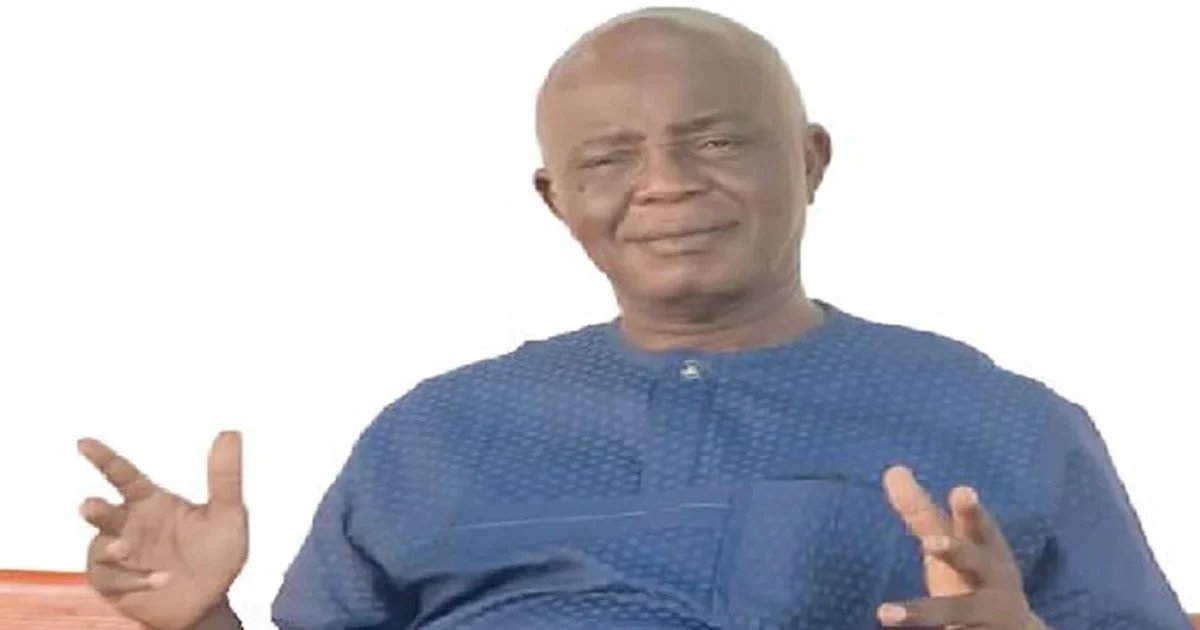
Ogun State Commissioner for Environment, Mr Ola Oresanya, speaks with BANKOLE TAIWO about the government’s efforts to address the recurring gas leaks in and around Ijebu-Ode, which have left more than 200 students requiring medical attention over the past two months
There have been repeated gas leak incidents in Ijebu-Ode and its environs over the last two months, raising public health concerns. What happened?
Well, if you look at the gas leakage in Ijebu-Ode, it was something very unusual. Although Ogun is a highly industrialised state, Ijebu-Ode is not one of the cities with a high concentration of industries.
So, our suspicion did not initially point towards industry. If it had been happening in Sagamu, Ewekoro, Ota or other industrial towns, the thinking might have been that some companies were releasing something into the air.
Carefully, we listed possible sources and started eliminating those that could not be responsible. We eventually ruled out industrial activity.
When it happened the first time about two months ago, we did not have a clue about the type of gas that was released because our gas probes, which we installed across the state, were concentrated mainly in other industrial towns.
The gas probes are what we use to monitor air quality levels and know when to act or when to shut down an industry that is exceeding limits.
When the incident occurred, we suspected human activities might be responsible. We combed the entire town and found some people producing local insecticides using carbide and cattle urine. We gathered them and warned them not to engage in such activities within the town again.
We thought that could be the source, but, interestingly, the closest area where those local concoctions were being produced was about a kilometre away from the school.
How did you react when you heard about the gas leakage?
We felt that if the odour was strong enough to cause students to collapse, then the people producing those substances would have long been affected. So we ruled that out. But we kept our eyes open and immediately installed air-monitoring systems inside the school and around the town.
When the second incident happened, the gas analysers we installed picked up the gas. It was detected to be methane with a high level of sulphide.
Sulphide levels in the air were elevated, methane was very high, and the volume was massive. But the interesting thing is that in the school, we have the junior and senior sections. The gas monitor at the senior school gate was giving a zero reading while the one at the junior school, just about 200 metres apart, was reading almost 22,000.
We thought something was wrong with the sensor. We changed it, but it gave the same value. When it happened the second time, it was not only at Our Lady of Apostles Secondary School; the crisis was also reported at Anglican Girls Grammar School, two other private schools in Ijebu-Ode, and St. Anthony Grammar School, Ijebu-Imushin, which is about a five-minute drive away.
Other residents along the same route were also affected. So, we knew then that there was more to what was happening because the odour occurred at the same time, around 7:40 a.m., and disappeared within 10 to 15 minutes. We knew something must be connecting those areas.
What did you do next?
We began to investigate what could have been the connection. We looked for gas pipelines and contacted those supplying gas up to about five kilometres away. We knew there was no gas pipeline connecting the schools. What would have connected them was a crack beneath the ground.
How did you arrive at that conclusion?
Yes, we arrived at that because there was a historical background. We looked at the geological survey, which showed there was a duct beneath the ground, a geological fracture that runs across those schools and settlements along its path.
That was why the gas leakage could be felt almost at the same time. Although we shut down the gas supply system, we are now able to narrow it down to two possible reasons why methane gas could be coming from beneath the ground.
It could either be tectonic action, a natural occurrence whereby the ground itself is reacting to magmatic intrusion, or seismic radiation from quarry activities.
It is possible that there is a quarry nearby where stones are being blasted, and explosives introduced into the ground may have distorted the underlying rock, causing the release of the gas that was then transported along the duct.
So, where are we now with respect to finding a permanent solution to this challenge?
We are working with the Federal Ministry responsible for gas, as well as institutions such as the Federal University of Agriculture, Abeokuta. We are collaborating with geologists, hydrogeologists, and geophysicists.
We are also working with the Department of Geosciences at Olabisi Onabanjo University, Ago-Iwoye. Together, we are investigating what triggered the seismic activity in the area. Was it quarrying, or was it the result of tectonic activity?
We have also reviewed historical records available online, and the documentation confirms that Our Lady of Apostles sits on fractured basement rock. That fracture extends along the same line where the gas leakage is occurring. If you check the available publications, you will see evidence of this connection.
So, has it been established that this obnoxious gaseous substance is coming from beneath the ground?
Yes, that is what the evidence suggests for now. However, what triggered its release from beneath the ground is what we still need to establish. Was it caused by tectonic activity or by quarrying operations?
Coincidentally, a lecturer from Tai Solarin University of Education, Ijagun, delivered a lecture few months ago in which he spoke about a potential earthquake that could occur in Ijebu-Ode around 2028.
Are you saying this recent gas leakage might corroborate what the lecturer said about a possible earthquake in 2028?
Well, if we determine that the gas being released from beneath the ground is the result of tectonic activity, which is a natural occurrence, then it could lend support to what the lecturer predicted. He suggested that an earthquake might occur around 2028.
So, if we establish that this is the result of a natural geological process, it means there may already be indications that we need to prepare for what could happen in the future. The gas leakage may be a sign of a larger issue than what we are currently seeing.
Some residents believe the obnoxious gas is being deliberately released into the air by criminals. What do you say to this?
I do not blame them for thinking that way. Parents and residents will naturally panic because people tend to fear what they do not understand. However, my responsibility as a public official is to establish the facts and allay their fears.
Yes, they have a right to be concerned, but I have a duty to reassure them based on evidence. From everything we have investigated so far, there is nothing to suggest that this is a criminal act. We have found no evidence to support that claim.
The security agencies: the police, DSS, Amotekun Corps, Civil Defence, and local vigilantes, have all been involved, and none has found anything to substantiate such allegations.
After the first incident, we immediately installed CCTV cameras around the affected schools. They are there for everyone to see.
We also have air-monitoring devices in place. As a scientist, I can say there is nothing pointing in that direction. As a security expert, of course, you must consider every possibility. As a resident, you will naturally be worried.
People will understandably ask: What kind of coincidence is this? Why are these incidents happening simultaneously in schools?
However, investigations have shown that these schools are situated along the same underground fracture line, which explains why the gas may be detected in multiple locations at the same time. The government is leaving no stone unturned in getting to the root of the matter.
There is also talk about an earth tremor that occurred in Ijebu-Ode in 1984. What is the connection between that incident and the present gas leak?
Interestingly, it was only after our recent investigation that I came across documentation relating to the 1984 earth tremor. The records show that there was indeed a significant earth tremor in Ijebu-Ode that year and that a fault line passes through the town.
There was a period after the tremor when underground water sources reportedly disappeared, and residents could no longer obtain water from their wells. Some people attributed the situation to spiritual causes and suggested sacrifices to certain deities because of the prolonged water shortage.
However, no detailed investigation was conducted at the time to determine the actual cause. Ijebu-Ode has a unique geological setting, and perhaps that same setting is linked to the current gas leak.
The historical evidence aligns closely with what we have discovered. The facts are documented and published. They show a continuous fault line connecting the affected areas.
If this gas leakage happens again, what should be done?
If the gas is being released as a result of human activities such as quarrying, then our responsibility is to halt those activities and conduct a thorough investigation. If quarry operators are using explosives that are disrupting underground channels, such activities will have to stop.
However, if the phenomenon is not linked to quarrying and is instead tectonic in nature, then we will have to consider alternative measures.
Are you talking about evacuation?
I may not be in a position to make that decision at this stage.
My role is to present the facts to the appropriate authorities and make recommendations based on the findings.
You also mentioned first-aid measures in case the incident happens again. What exactly did you mean?
Yes, first aid is extremely important. We are grateful that no fatalities were recorded because the outcome could have been very different. Nothing should happen to anyone’s life. That is part of our responsibility to the people, to protect them and safeguard their well-being.
If anyone detects the gas again, I advise them to soak a handkerchief in water and place it over their nose. The gas appears to have a strong affinity for oxygen. When inhaled, it can deprive the body of oxygen and cause suffocation.
A person may collapse but regain consciousness because the exposure may be brief. However, inhaling large quantities could be dangerous or even fatal.
Ordinarily, inhaling methane in small quantities is not considered harmful.
Some residents are saying the gas leakage may be linked to the late Awujale not being buried according to traditional rites, but in line with Islamic injunctions.
(Laughs) Well, at a time like this, people will naturally speculate. Even as the Commissioner for Environment, I considered several possibilities at the outset, including sabotage and other explanations. So, it is understandable that people would have different theories.
If someone like me, who has access to information, could initially entertain various possibilities, how much more those who do not have access to the facts? Incidents like this inevitably generate rumours and assumptions. But as I have said, the government is working round the clock to resolve the situation.
The rainy season is here. What is your message to the people?
We are fully prepared for the season, and we are appealing to residents to cooperate with us so that we can minimise the risk of severe flooding this year.
We urge people not to dump refuse into drainage channels. They should also avoid dumping waste on roads, as it will eventually be washed into drains and waterways.
The new leadership of the Ogun State Waste Management Agency is working hard to ensure that refuse is collected promptly and that waste does not accumulate in communities.
We all have a role to play. Government and residents must work together to ensure that waterways and drainage channels remain free of obstruction.