
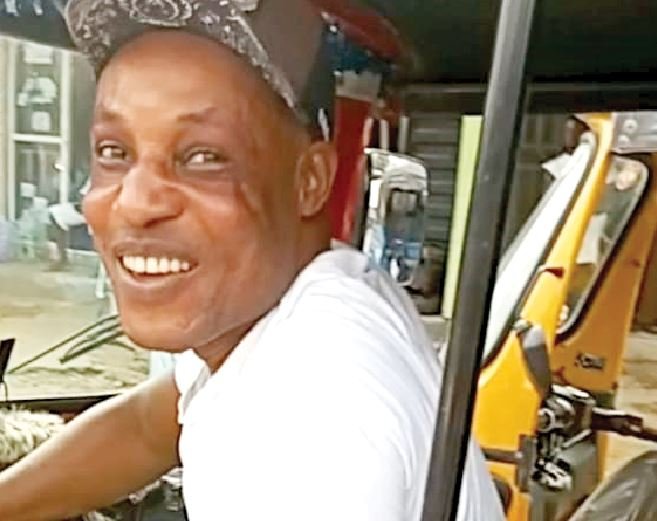
Rivers-based phone repairer, Itoro Moses, shares with BIODUN BUSARI a devastating experience of how his elder brother, Promise, was allegedly shot dead by an Air Force officer during a patrol at a junction
What is your relationship with the deceased?
My name is Moses Itoro. I’m a phone engineer. I am based in Rivers State. The deceased was my elder brother. We lived almost in the same neighbourhood because our houses were not far from each other before he was killed.
What did your brother do for a living?
My brother was a tricycle driver. He was a generous and kind-hearted person. He was also a gentle and easy-going man.
How about his family?
He was not married. A lady was pregnant for him, although there was a little dispute about the incident which they were trying to sort out until his death. But they didn’t live together. So, I’m his family.
How old was your brother?
He was in his early 40s.
When you said you are his family, don’t you have parents or other siblings?
Our parents died when we were still young. It was my aunt who took care of my brother and me. She became our foster parent. My aunt is still alive.
She lives in Port Harcourt. My late brother and I are the only children of our mother. My father had another wife, who was my stepmother. She had died too. She had her children.
How did your brother die?
He was shot dead by an Air Force officer. The officer shot my brother while he was going about his daily job at the park. Up till now, I still can’t understand the circumstances surrounding the incident.
Were you there when he was shot?
No, I wasn’t there. I was in my office that fateful day on April 6, 2026. It was about 2:30 pm; a boy came to the office and told me that his mother wanted to speak with me. When I collected the phone from him, a voice asked if I knew anyone bearing Promise Itoro.
Immediately I heard that, I said that was my brother. The person on the phone just said, ‘Air Force personnel shot your brother at Eleme Junction.’
The call ended and I faced the boy dumbfounded. I couldn’t believe my ears. I asked the boy if he knew what he was saying. He said he was sure that my brother was dead.
I didn’t know how I got up, stormed out, and started running to the place. Meanwhile, a few hours earlier, when I passed around the place, I heard people talking about a guy who was killed by the Air Force. They were condemning the act. I didn’t know it was my brother.
Had your brother quarrelled or engaged in a fight with anyone, whether a uniformed man or a civilian?
My brother was not a troublemaker. He was not aggressive. All the people in the park, including the market women, can testify that no offence or issue could be traced to him.
What did you see when you got to the scene?
I met people gathered, and my heart raced, whispering a prayer that it should not be true. But it was true. I found my brother’s lifeless body in a pool of his blood.
He was shot twice; one bullet in the chest and the other in his lower abdomen close to his genitals. Women were crying and laying curses on the person who fired the gun.
What was your next action at the scene?
I tried to carry him, but I was powerless and helpless. His tricyclist colleagues were also present. I just went straight to Elimgbu Police Station to write a statement.
Then, they referred me to the State Criminal Investigation Department. All the tricyclists operating in the area followed me.
Did anyone tell you if the Air Force soldier told your brother about his offence before killing him?
The people there said nothing happened. There was no argument or fight. After he shot him, he jumped into their Hilux, and he was driven away. The only thing I heard was there was a hike in their ticket and there was a protest.
I learnt that the chairman of the tricycle riders hiked the ticket fees for members to pay. So, there was no rancour or protest because I even passed by the place earlier.
Everywhere was calm. Eyewitnesses who were there said that my brother didn’t drag anything with the Air Force officials. He was naturally a calm person. He wasn’t a troublemaker.
What was the reaction of the people at the park after he was shot?
They wanted to rush him to the military hospital, but the Air Force personnel used their vehicle to block the people who were carrying him. They wanted to seize his corpse.
It took the intervention of all the tricycle riders and the crowd who gathered, stood their ground, and resisted the officers before they drove off.
What did you tell them at the police station?
I told them that I wanted to take the case to court, but they said they were not in the position to file the case. That was why I was referred to the SCID, where I was told that it would be taken up. The tricycle riders followed me everywhere, making their statements as well.
Have you taken the case to court?
After the incident, I felt depressed. My mental health was in a mess. I didn’t get myself together. Life became so meaningless. Many calls were coming in; I picked some and couldn’t pick some. It was recently that I started putting myself together.
Has the Air Force contacted you over the incident?
I have not heard from anyone. Whether it is their commander or any other high-ranking officer, nobody has reached out to me; not even a phone call was received.
According to my lawyer, the officer who shot my brother also made a statement at the SCID. I was also told that the alleged killer was detained in their guardroom, but I didn’t see him.
I don’t even know what his face looks like. I don’t know his name. They did not let me see him. I was eager to see the man so I could ask him how grievous my brother’s offence was, to be shot twice in broad daylight.
As a matter of fact, I’ve heard that they were trying to find out about me. They are saying I’m just a small boy trying to take the matter up with them. That is why I want justice for my late brother as quickly as possible.
The man who pulled the trigger should be prosecuted, and everyone who participated in the heinous act should be brought to book.
My brother was a law-abiding citizen. He was innocent. His killers should not roam free in society. They should face the consequences of their actions under the law.
What kind of support have you got so far?
The Association of Tricycle Riders, which my late brother belonged to, is solidly behind me. I receive their calls every time, asking me that I should carry them along with any decision I’m taking for them to support.
Who is paying for the remains of your brother in the mortuary?
It is the Air Force officers. They killed him, and they have been paying the fees to the mortuary. I knew about it on a particular day an SCID officer went with me.
Are there political leaders who have spoken against this incident?
None that I can remember except the chairman of the motor park in the local government area. There was a time after the incident that he approached me and sympathised with me. He said he was not in support of the killing.