
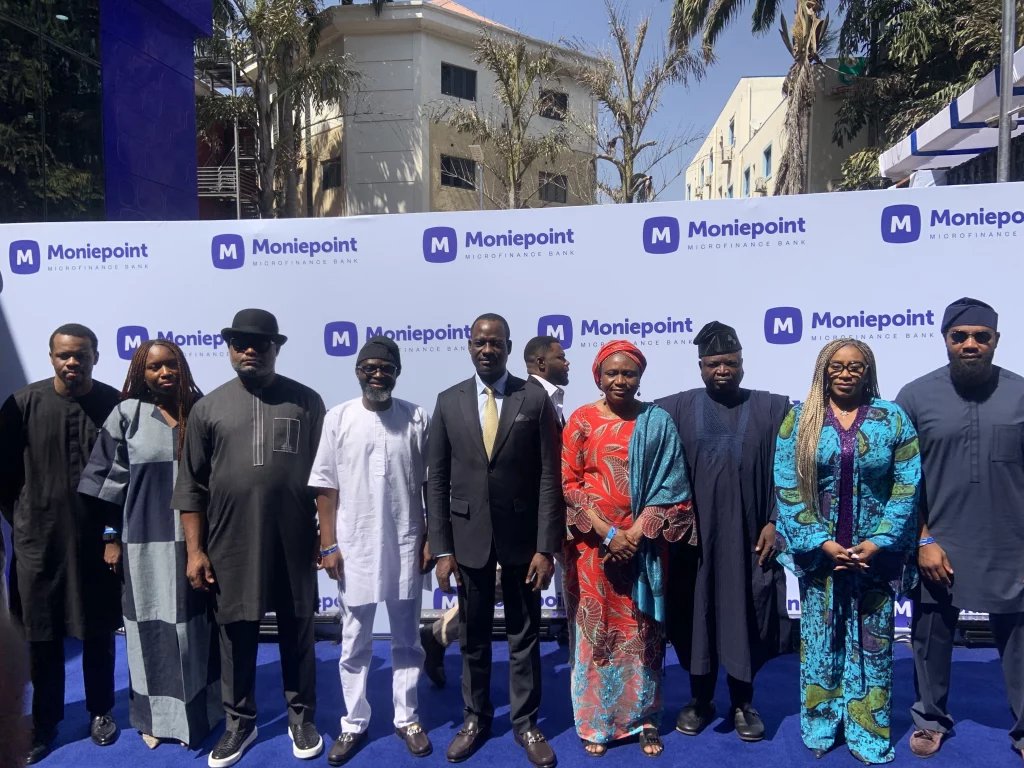
Moniepoint Microfinance Bank (MFB) has commissioned its North Central regional headquarters in Abuja, expanding its physical presence in line with the Central Bank of Nigeria’s (CBN) requirement that nationally licenced microfinance banks establish physical locations alongside their digital operations.
The move reflects a broader regulatory push for fintechs to respond to growing customer bases and operations with increased physical presence. By requiring a stronger physical footprint, regulators want to ensure that nationwide digital banking operations are matched by accessible, in-person customer support.
Speaking at the commissioning on Friday, Babatunde Olofin, Moniepoint MFB’s managing director, said the bank plans to replicate the regional headquarters model in other parts of the country. The bank processes more than ₦1 trillion ($719.8 million) daily for 21 million customers, according to Olofin.
The Abuja office is part of a wider physical network that already includes offices and service centres in northern states such as Borno, Bauchi, Kaduna, Kano and Sokoto. Moniepoint also operates a nationwide point-of-sale network serving businesses across all 774 local government areas.
The expansion comes as digital payments gain ground among businesses in northern Nigeria, where cash has traditionally dominated commercial activity. In Borno State, for instance, more than 45% of customers in some markets prefer digital payments. Bank transfers accounted for 28.6% and POS payments 17%.
Olofin said physical locations would help the bank serve customers who may be less comfortable resolving banking issues through digital channels alone.
“Banking is a business of trust,” he said. “We started banking in informal sectors that traditional bankers did not—the people selling spare parts in Ladipo, the women selling corn on the streets. You won’t find a lot of these people technically educated. There should be a place where people can easily walk in, get served in any local language of their choice, and ensure that their money is safe.”
Olofin clarified that Moniepoint MFB is not adopting the expensive, branch-heavy model of traditional commercial banks. Instead, it will maintain minimal physical hubs where customers can access relationship managers and resolve complex issues. While this leaner approach limits expansion costs, maintaining physical locations and staffing them will still increase the fintech’s operating expenses.
Nigeria’s Vice President Kashim Shettima, represented by the Minister of Finance and Coordinating Minister of the Economy, Taiwo Oyedele, linked Moniepoint’s expansion to the broader push to deepen financial inclusion and support small businesses.
“Technology offers speed and reach, but people also need someone who can explain,” Shettima said. “Moniepoint’s decision to combine digital services with face-to-face assistance responds to an important reality. Its lasting value will be measured by the businesses it helps to grow.”
Beyond payments
Beyond physical expansion, Moniepoint is deepening its lending business after disbursing over ₦1 trillion ($719.8 million) in loans to small businesses in 2025. The company plans to expand credit access further to micro-businesses, agriculture and Compressed Natural Gas (CNG) initiatives. Chief Business Officer, Tobi Amira, said businesses that access Moniepoint’s working capital loans see an average 40% year-on-year growth in transaction volume.
“Going into next year, we want to further accelerate that impact by coming further down to even smaller micro-businesses,” Amira said. “While we are doing a general expansion of our credit, we also have specific programmes targeted at agriculture and fuel, which are impacting the country the most right now.”
Founded as TeamApt, Moniepoint has grown into one of Nigeria’s largest payment and business banking platforms and says it has created over one million jobs through its agency banking and merchant network. Its growing physical footprint reflects a broader shift in Nigeria’s fintech industry, where companies that initially scaled through digital platforms and agent networks are increasingly investing in physical infrastructure as they take on the obligations of regulated financial institutions.
In June, TechCabal reported that Kuda Microfinance Bank plans to open more experience centres for customer support and community engagement after it received a national microfinance bank licence from the CBN.