
In March 2026, the United Kingdom government published a list of Nigerian companies expanding operations in the UK, including fintechs Moniepoint, Kuda and LemFi. Their expansion reflects a growing interest among African tech companies in the UK as a base for building and growing their businesses.
A November 2026 report by TLP Advisory, a cross-border venture law firm, examined 100 technology companies across Nigeria, Kenya, South Africa, Egypt, Ghana and Morocco that have documented affiliations in the UK, the United States and the United Arab Emirates (UAE). The US was the most common destination, with 67% of the companies affiliated there. The UK followed at 32%, while 23% were connected to the UAE.
The figures suggest that the three destinations serve different purposes in the international structures of African tech companies. According to the report, the US is the most common destination for incorporation because of its familiar corporate structures, particularly Delaware-incorporated companies, which make companies easier to invest in. 81% of US-connected companies in TLP’s sample had no other recorded link to the country beyond incorporation.
Meanwhile, the UAE is more associated with companies establishing operational bases, as only 13% had incorporation as their sole link. The report shows that the UK sits between the two, combining company registration with operational expansion and regulatory licensing, as 84% of UK-connected companies were incorporated there, 47% maintained an operational presence, and 19% held regulatory licences. By comparison, only 3% of US-connected companies and 4% of UAE-connected companies in the sample held regulatory licences.
According to the report, Nigerian companies account for roughly two-thirds of the identified UK regulatory licensing connections, most of which are financial services businesses. Understanding why African companies are building regulated businesses in the UK requires examining the capital and regulatory access they seek.
Pressure at home
TLP’s earlier research found that over 76% of funded Nigerian startups surveyed had raised capital in US dollars. Between September 2023 and September 2024, the naira dropped by 71.19%, while inflation rose to nearly 33.9% in October 2024. A Nigerian fintech raising money in dollars but earning revenue in dollars faces a currency mismatch, as depreciation makes dollar obligations more expensive to manage.
Another reason the UK appeals to African fintechs is its established communities with commercial and financial ties to the continent. The 2021 UK Census recorded over 270,000 Nigeria-born residents in England and Wales. Nigeria also received about $22.8 billion in personal remittances from the diaspora in 2025. Businesses with links to Ghana, Kenya, and South Africa can draw on similar diaspora and commercial connections. This provides an opportunity for remittance companies to begin operations by serving people who regularly send money home.
These existing financial relationships can provide an initial customer base for remittance or payment companies. A UK presence could allow the company to build for customers on both sides of the corridor, although to reach these users at scale, it may still need to establish partnerships and secure regulatory approval, making this another consideration for companies expanding into the UK.

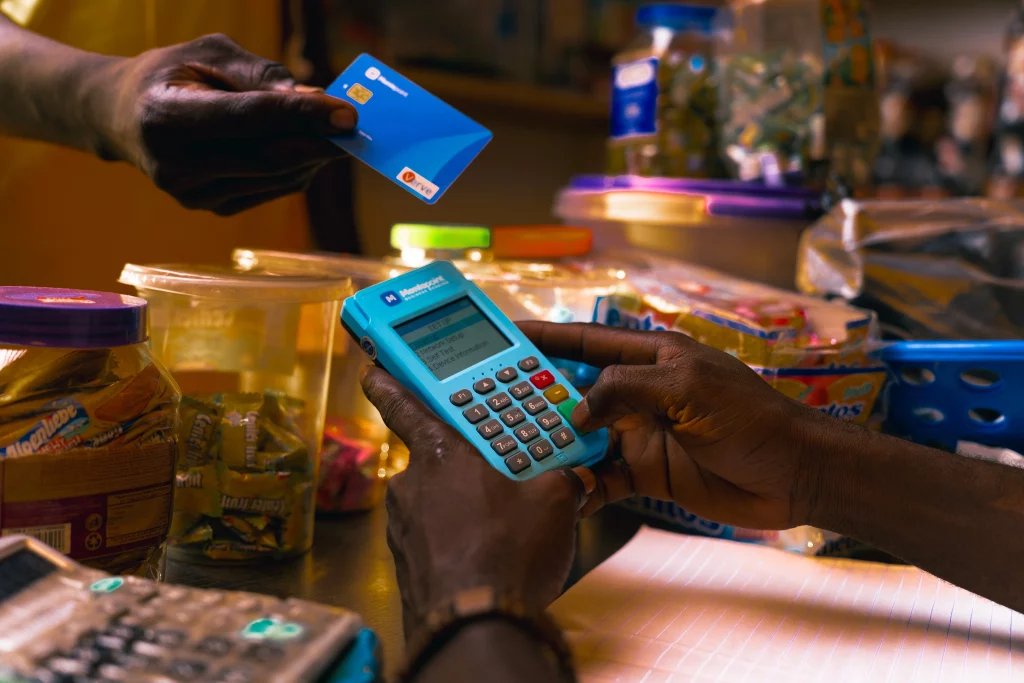
Image source: Moniepoint
The Financial Conduct Authority (FCA) in the UK oversees a range of financial services activities through a national regulatory framework. In the US, money transmission is licensed state by state, across 49 states and Washington DC. This means being licensed in one state does not mean they would be licensed in another. In the UAE, payment companies operating on the mainland need authorisation from the Central Bank. Companies operating within financial free zones such as the Dubai International Financial Centre (DIFC) or Abu Dhabi Global Market (ADGM) are regulated separately, and their licences do not automatically allow them to offer payment services across the UAE.
Capital at every stage
The UK is also trying to position itself as a place where African companies can access capital at different stages of their growth. The UK offers tax incentives designed to encourage investment in qualifying early-stage businesses. The Seed Enterprise Investment Scheme (SEIS) and Enterprise Investment Scheme (EIS) provide tax relief to investors who back qualifying companies. SEIS covers the first £250,000 a company raises, for businesses with fewer than 25 employees and under £350,000 in gross assets. EIS takes over for larger rounds. However, both require a genuine UK operational presence and exclude banking, money-lending and other financial activities.
The government has introduced other initiatives to attract founders and businesses, including the Global Entrepreneur Programme, which supports selected international entrepreneurs in establishing a UK headquarters or research and development presence, and the Innovator Founder visa, which is subject to endorsement and eligibility requirements.
According to TLP Advisory, more than 110 African companies are listed on the London Stock Exchange. Airtel Money’s October 2026 listing provides a recent example of the scale of business that London hopes to attract. The mobile money company began trading on the LSE’s Main Market at a valuation of approximately £5.3 billion.
African technology companies have also looked to US exchanges, with Jumia listing in 2019 and OPay’s planned a $304 million Initial Public Offering in New York before withdrawing it in October 2026 following a regulatory inquiry.
London is trying to make its capital markets more attractive to growing companies by revising its listing rules and introducing the PISCES sandbox in 2025. The Private Intermittent Securities and Capital Exchange System (PISCES) allows investors to buy shares in eligible private companies and existing shareholders to sell theirs at scheduled intervals, without requiring the company to go public. These are part of London’s effort to attract companies at different stages of growth.
The UAE’s free zones and financial centres are designed to attract businesses seeking a base for regional trade and operations. Initiatives such as Abu Dhabi’s Hub71 offer selected startups cash, subject to programme conditions.
The cost of staying
The UK’s growing appeal does not mean every African company with a British entity is building a substantial business there. An operating presence requires customers, employees, licences, local partnerships and sustained spending. Maintaining an overseas entity also brings legal, tax, reporting and compliance costs.
Moniepoint’s UK accounts offer a glimpse of those costs. Its UK subsidiary reported a loss of £1.2 million for 2024, its first year of operation, before generating revenue in the country. The company attributed the spending to setting up the infrastructure, technology and compliance systems needed to enter the market.
The UK offers a combination of diaspora connections, a national financial regulator, access to international capital and a mature services ecosystem for African tech founders. The US remains important for venture financing and corporate structures, while the UAE offers a base for companies pursuing opportunities in the Middle East. Each market plays a different role as the business expands.