
Ericsson, a global telecoms network equipment giant, has spent decades building South Africa’s telecommunications infrastructure. Now, as operators prepare another phase of investment, the question is whether they can make money from 5G.
South Africa’s mobile operators are now under pressure to turn years of 5G investment into sustainable returns. With consumer data revenue facing pricing pressure from fibre competition, the next growth opportunity lies in enterprise connectivity, private networks and artificial intelligence (AI)-powered services that businesses are willing to pay a premium for.
Siseko Ngxola, head of Ericsson South Africa, believes operators must move beyond connectivity as a commodity and develop services businesses will pay a premium for.
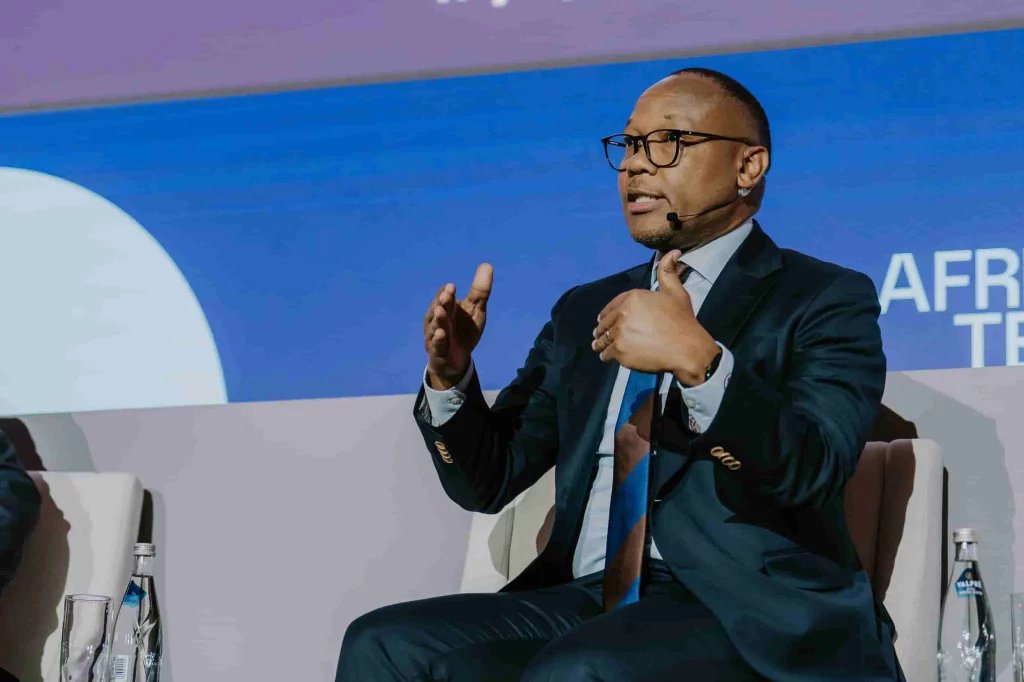
“Safe to say the full benefit of 5G has not been fully realised. The networks today, as they are, are still sitting on 5G non-standalone,” Ngxola told TechCabal on the sidelines of the Africa Tech Festival in Cape Town on Thursday.
South Africa’s operators have largely deployed 5G non-standalone networks, which use 5G radio technology alongside existing 4G core infrastructure. Moving to 5G standalone will introduce dedicated 5G core networks, enabling capabilities such as network slicing, lower latency and more reliable connectivity for enterprise applications.
The opportunity, according to Ngxola, lies in serving industries where network reliability, security and predictable performance are critical. Mining companies, ports and utilities are among the sectors Ericsson sees as potential customers for private 5G networks, which can support connected machinery and industrial automation.
“5G will also unlock the journey for AI for enterprise customers,” Ngxola said. “They’ll be able then to have an offering that can be targeted to the likes of your mines, your ports, your utilities, where you can provide these predictable and guaranteed services over secure networks.”
Ericsson is pursuing this opportunity with systems integrator ComSol, which is helping develop private 5G deployments. Ngxola said the partnership would take Ericsson beyond equipment supply into deploying, operating and managing industrial networks.
Ngxola said power utility Eskom had also started formal tender processes to engage the market on adopting 5G in its power plants. He said businesses will need evidence that private 5G can improve productivity, reduce downtime or deliver operational efficiencies.
Ericsson expects monthly mobile data traffic to rise from 5.3GB per user in 2025 to 12GB by 2031. Ngxola also pointed to growing uplink traffic as AI-driven services generate more activity across networks.
He cited Ericsson’s work with Verizon, a United States telecommunications network operator, where AI-powered network optimisation delivered reported spectral efficiency improvements of 8.9% in the downlink and 8% in the uplink.
“Technology should not be adopted for the sake of adopting technology,” Ngxola said. “It must be to address certain challenges.”
In South Africa, mobile operators face growing competition from fibre providers such as Vumatel, Openserve, MetroFibre and Frogfoot. Telkom’s home fibre catalogue lists 30Mbps packages from R495 ($28.32) a month on Vumatel and R499 ($28.55) on Openserve, offering households an alternative to mobile data for everyday internet use.
Ngxola said fibre providers had created pricing pressures that mobile operators could struggle to match because of limits on radio capacity and the economics of running mobile networks. Differentiated connectivity could help them compete on services rather than data prices.
Advanced connectivity also requires investment in the infrastructure supporting mobile services. In November, MTN South Africa, the country’s second-largest mobile operator, selected Ericsson to modernise its voice core network using its cloud-native internet protocol (IP) multimedia subsystem (IMS), with deployment expected across 2026 and 2027.
The upgrade will support higher-quality voice, prepare the network for voice over 5G and introduce AI-powered features such as spam protection and branded calling.
Branded calling could allow businesses, including banks, to identify themselves and the purpose of calls on customers’ phones, improving answer rates and creating a new revenue stream for MTN, according to Ngxola.
Yet spectrum costs, infrastructure investment and energy constraints compete for operators’ capital. Ngxola believes the investment cycle is an opportunity to rethink how networks generate value as AI and enterprise digitalisation create demand for more sophisticated connectivity.