Welcome to the first edition of TC Mzansi. We’re excited to bring you closer to the people, ideas, and businesses shaping South Africa’s technology ecosystem and the wider Southern African Development Community (SADC) region.
South Africa’s technology story is bigger than its established tech hubs. Across the country and throughout the wider region, young people are building businesses, developing solutions, and finding new ways to tackle everyday challenges. Some are doing this in the offices and innovation hubs of Cape Town and Johannesburg; others are working in townships, rural communities, and places that rarely make the technology headlines.
This newsletter will bring those stories into focus. We will explore the people, ideas, investments, and innovations shaping the region’s digital future, while asking what it takes to turn promising ideas into businesses that create real impact.
Expect a new edition every week by 1 pm SAST (12 pm WAT).
We’re glad to have you along for the journey.
Let’s stay connected!
Phathisani Moyo Head, South African Desk, TechCabal
Top Headlines from South Africa
Mixed reactions as Ramaphosa defends his Silicon Valley trip
Microsoft’s 18-hour outage exposed South Africa’s dependence on Big Tech
ICASA to fight Sakeliga’s court bid over 30% ownership rule
From coding at 12 to building an AI company backed by global investors
Let’s dive in, but first… check this out
Put your business in front of Africa’s decision-makers
Reach over 150,000 tech and business leaders across Africa with TC Daily and the TechCabal newsletter family. Introduce your brand, promote your product, or share your next big launch with the people building and backing businesses across the continent.
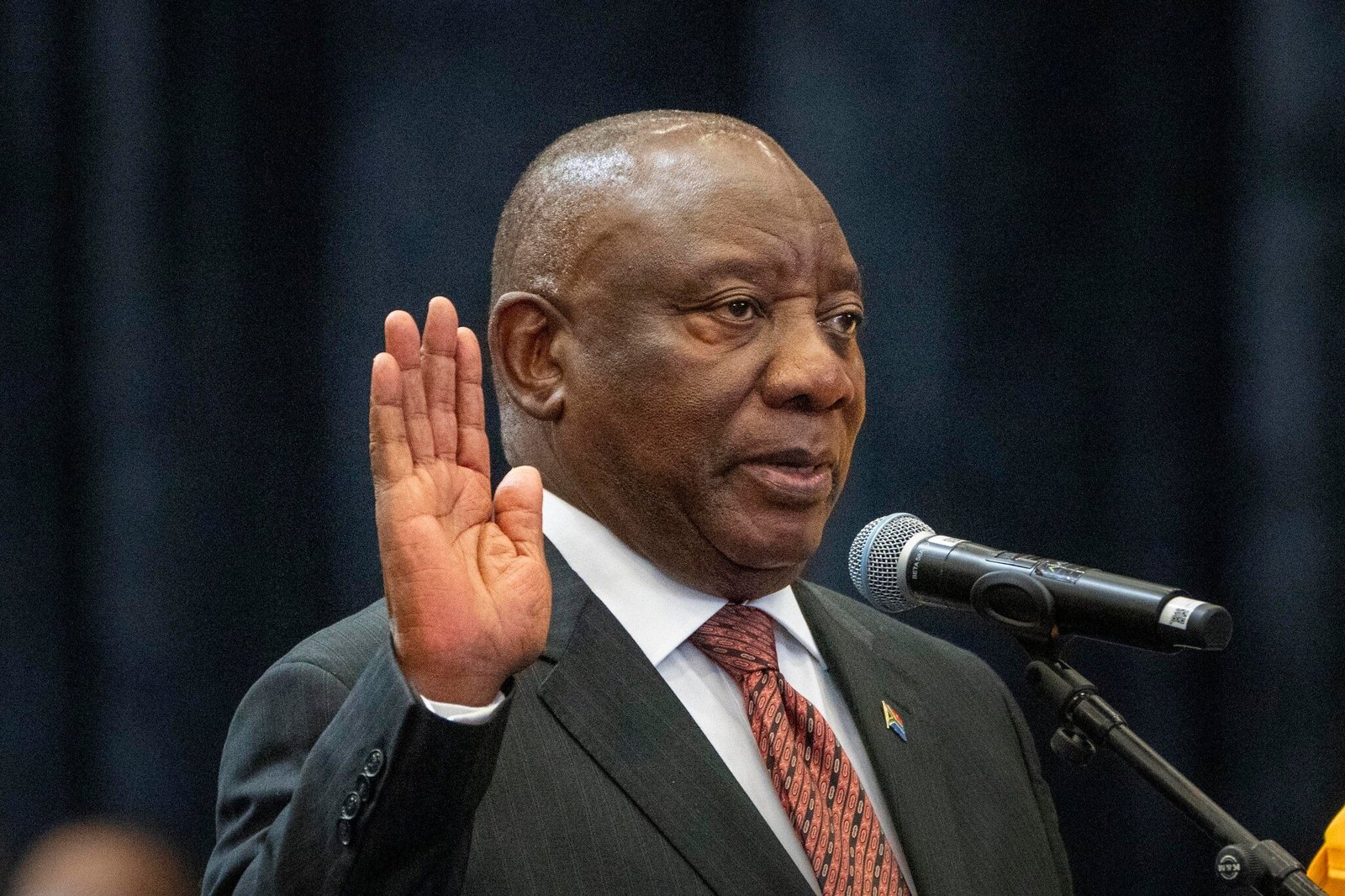
South Africa’s Cyril Ramaphosa. Image Source: NPR.
South Africa’s President Cyril Ramaphosa’s 300-person delegation to Silicon Valley has sparked debate over public spending, diplomatic priorities, and South Africa’s ambitions in artificial intelligence (AI).
Ramaphosa defended the week-long visit, saying private companies covered much of the cost and that the mission could attract investment, build technology partnerships and position South Africa as an AI innovation hub. The delegation includes eight cabinet ministers, 24 startups, postgraduate AI students, researchers and business leaders. Its programme includes engagements with Google, Microsoft, Cisco, and Palo Alto Networks.
However, the president has refused to disclose the trip’s total cost or identify its sponsors, fuelling criticism from citizens, former diplomats, and political observers. Supporters argue that the visit should be judged by its ability to deliver investment, skills development, and jobs.
Phathisani’s view: South Africa needs global technology partnerships, but taxpayers deserve transparency and clear, measurable returns, not promises wrapped in diplomatic spectacle.
Microsoft’s 18-hour global outage on November 13 disrupted South African businesses and public institutions, exposing the risks of relying on a handful of technology giants to keep essential operations running. Eskom, Absa, and FlySafair were among those affected, alongside the City of Cape Town and the South African Revenue Service (SARS).
The disruption hit Microsoft 365 services, including Outlook, Teams, OneDrive, and SharePoint, forcing organisations to redirect customers and employees to alternative communication channels. Although Microsoft worked to restore services, the incident exposed how a failure in one global technology provider can ripple across banking, aviation, public services, and the broader economy.
As cloud platforms become central to business operations, the outage raises urgent questions about digital resilience, backup infrastructure, and business continuity. South Africa cannot build a resilient digital economy while leaving critical business and public services vulnerable to failures in infrastructure it does not control.
South Africa’s telecoms licencing rules are heading for a legal battle that could shape how foreign technology companies enter the market. The Independent Communications Authority of South Africa (ICASA), the country’s telecoms regulator, will oppose lobby group Sakeliga’s court application challenging the regulator’s refusal to recognise equity-equivalent investment programmes as an alternative to 30% local ownership.
The programmes would allow multinational operators to invest in areas such as skills development and enterprise support instead of selling shares in their South African businesses to historically disadvantaged groups (HDGs).
The case has implications for companies such as Starlink, the Elon Musk-owned satellite Internet company, which could face ownership requirements before securing a licence. Sakeliga wants the High Court to overturn ICASA’s decision, arguing that it failed to implement Communications Minister Solly Malatsi’s policy direction to align ownership rules with the ICT sector code.
The dispute pressures the government’s efforts to attract foreign investment while maintaining transformation requirements in the telecommunications industry.
Young South African tech entrepreneur Emile Ferreira is building the kind of technology that could shape how businesses use artificial intelligence. Ferreira is the co-founder and chief technology officer of Verascient, a Cape Town-founded AI infrastructure startup that recently raised R19.5 million ($1.2 million) from international investors, including Founder Collective, co-founded by South African technology entrepreneur David Frankel.
His journey is remarkable. He taught himself to code at 12, joined software development platform Replit as one of its first hires while still in high school, and developed an on-device AI assistant that reportedly reached more than 200,000 Android users. He later graduated with distinction from the University of Cambridge with a master’s degree in advanced computer science.
Verascient is tackling a practical business challenge: helping organisations turn fragmented information into useful intelligence for AI agents.
For Harry Huang’s family, paying an overseas supplier sometimes meant finding someone who knew someone. Years later, that frustration is the business opportunity behind Lumepay. The former crypto sceptic is combining stablecoins with banking infrastructure to help African businesses move money across borders. In this week’s Coffee With, TechCabal’s Phathisani Moyo speaks to Huang about building a payments company around a simple expectation: the money must arrive.
Image Source: United Nations Capital Development Fund (UNCDF).
In Zambia, Airtel turns mobile money into a gateway to stock-market investing: Airtel Zambia has launched Airtel Money Buy Shares, a service that lets customers buy shares in companies listed on the Lusaka Securities Exchange through the MyAirtel app using their mobile money accounts. The move pushes telecom operators further into financial services, beyond payments and transfers, and could lower barriers to stock-market participation.
The opportunity is significant. FinScope Zambia’s 2025 survey found that 76.1% of adults used mobile money, while the share using capital-market products rose from 0.6% in 2020 to 13.8% in 2025. The challenge will be turning mobile access into sustained investment participation.
Zimbabwe’s Cabinet approves national artificial intelligence charter: Zimbabwe’s Cabinet has approved a National Artificial Intelligence Charter to establish ethical and governance principles for AI development and deployment. The framework operationalises the country’s 2026–2030 National AI Strategy and sets expectations around transparency, accountability, inclusion and human-centred technology.
It also proposes governance structures for strategic oversight, coordination and complaints handling. The development matters as African governments move from announcing AI ambitions to deciding on regulation. For businesses, the charter could provide greater regulatory clarity, but its impact will depend on how the principles are translated into enforceable rules and practical oversight.
Paratus brings Starlink enterprise services to another SADC market: Paratus Group, a pan-African fibre and satellite operator, has launched Starlink-powered enterprise connectivity in Malawi, targeting businesses and institutions that struggle with unreliable or limited terrestrial networks. Its offering will serve sectors including banking, healthcare, agriculture, mining and education, with local installation and technical support.
The launch expands Paratus’s network presence to 16 countries across sub-Saharan Africa. The company says it has already signed several enterprise customers and can complete installations within 24 to 48 hours, depending on location. The move adds another competitor in the regional satellite connectivity market, while raising questions about affordability and how far enterprise-focused services can extend access beyond major cities.
Four-country satellite school project targets 30 rural schools: Satellite operator SES and the International Telecommunication Union’s Partner2Connect coalition plan to connect 30 rural schools across Malawi, Burundi, Zambia and Zimbabwe by the end of 2026. The project is expected to benefit between 20,000 and 30,000 students and teachers, giving underserved communities access to online learning platforms, teacher-training resources, and digital collaboration tools.
Satellite connectivity is intended to overcome gaps where fibre and mobile infrastructure have not reached. The initiative is part of SES’s wider commitment to connect 100 schools globally, highlighting the role of satellite networks in extending digital education across rural southern Africa.
A quick look at the week’s most consequential story in Southern African tech.
Teraco, Africa’s largest interconnected data centre operator, has begun receiving wind-generated electricity through South Africa’s national and municipal grids, marking a significant step in its renewable energy strategy.
The first electricity from its contracted independent power producer (IPP) wind project reached its Cape Town data centres in September. The initiative forms part of a R3.5 billion ($200 million) renewable energy programme combining solar generation, wind power purchases and grid infrastructure investment.
A key component is Sediba, a 120MW solar plant under construction in the Free State, backed by R2.25 billion. Teraco aims to achieve 100% renewable energy by 2035, as demand for data centre capacity grows alongside cloud computing and AI.
That’s the estimated enterprise value of Telkom as MTN revives takeover talks that could reshape South Africa’s telecommunications industry.
MTN, South Africa’s second-largest telecom group by subscribers, has revived takeover talks with Telkom, its JSE-listed rival, four years after walking away, in a deal that could reshape South Africa’s telecoms industry. The proposed acquisition would combine MTN’s mobile business with Telkom’s 25 million subscribers, fibre network and enterprise operations. But with the government owning 40.5% of Telkom and the PIC another 11.08%, the deal faces significant shareholder, competition and regulatory hurdles. If successful, it could transform the country’s connectivity market and become one of the biggest transactions in South Africa’s digital economy.
South Africa’s Competition Commission. Image Source: MyBroadband.
South Africa’s Competition Commission has reached a settlement with Elon Musk’s social media platform X (formerly Twitter), requiring it to support qualifying local news publishers through a two-year monetisation programme. X must introduce the programme within six months, with twice-yearly workshops on revenue tools, audience analytics, and content strategies.
Its AI arm, xAI, will separately train publishers twice a year on managing access to their content by AI chatbot Grok. But the deal stops short of guaranteeing direct payments. The Commission’s inquiry found that four local publishers earned a combined $914.25 from X’s creator revenue programme. The test now is whether the commitments translate into meaningful income and greater control over how AI uses local journalism.