
In a statement to Kenya’s data protection regulator on October 21, Joy Kalekye, a Kenyan student, recounts an encounter she had long since forgotten. A man approached her, asked a few personal questions and left. She never saw him take out a phone, a camera or any other recording device. At the time, she had no reason to think her privacy had been violated. Eleven months later, she would find out just how wrong she was.
In March 2025, Kalekye was waiting for a friend near a petrol station in Ngara, a busy Nairobi neighbourhood known for its bus stops and wholesale stalls. A man wearing dark glasses approached her and asked her name, age, and whether she lived with her parents or with her husband. She took his number but declined his suggestion to meet at a nearby lodging. Then she forgot about him. Eleven months later, a friend called to tell her she was trending.
Kalekye’s statement forms part of an investigation by Kenya’s Office of the Data Protection Commissioner into Meta Platforms and two companies in its AI outsourcing chain. They are Samasource Kenya EPZ Limited, which employed Nairobi workers to label footage from Meta’s Ray-Ban glasses, and its US parent, Samasource Impact Sourcing, Inc. Both operate under the Sama name, an outsourcing business that supplies human workers to label data and review content for AI systems.
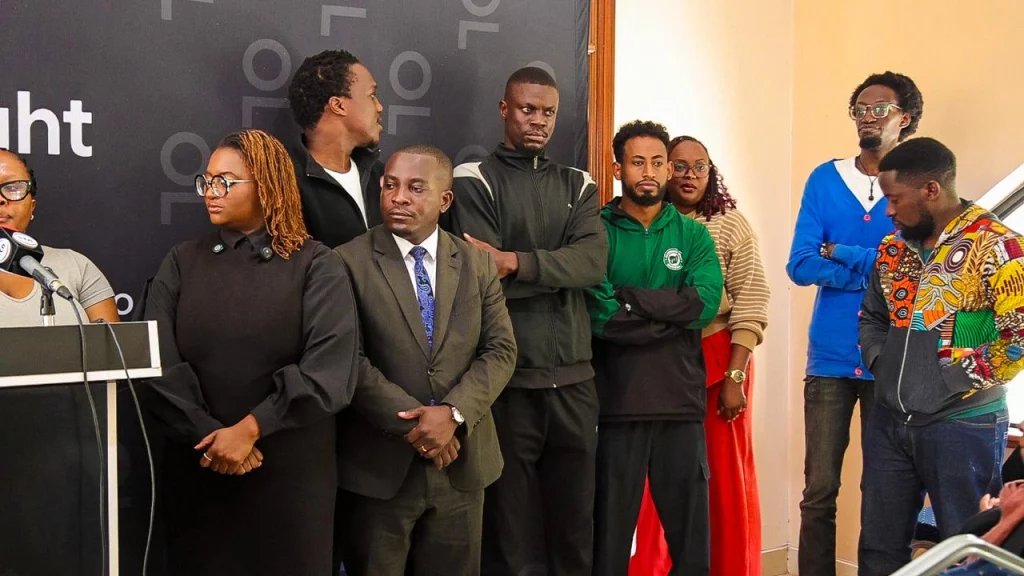
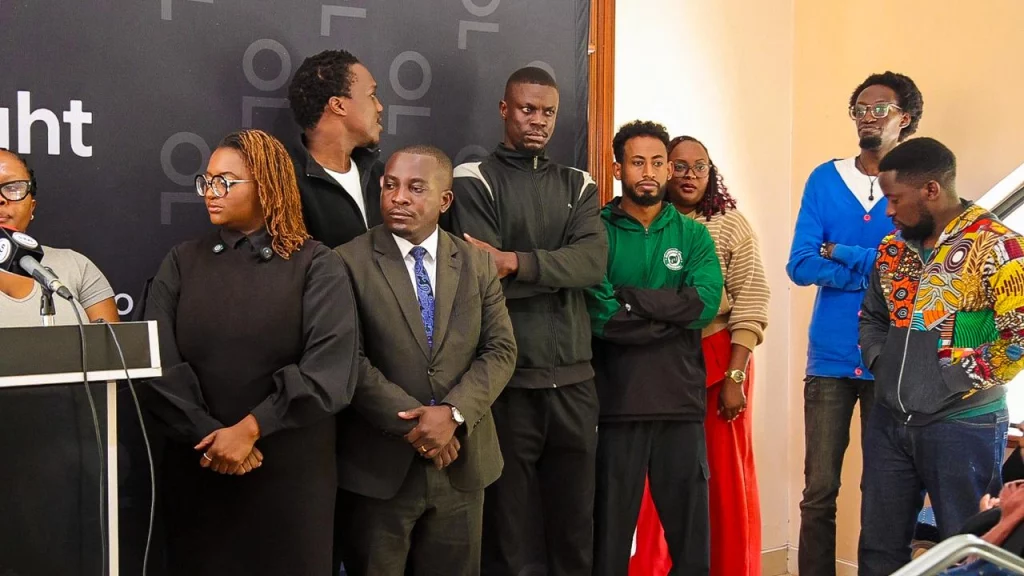
The statement became public on November 16, alongside a sharply worded open letter from The Oversight Lab, a Kenyan legal advocacy group that takes on technology companies over their treatment of workers and their impact on the public. The group had petitioned the data regulator to investigate Meta’s glasses and the handling of footage they capture.
Kenya has spent seven years building a legal framework to hold big tech accountable for harm caused on its soil. Yet when it comes to enforcement, the companies easiest to reach are often the ones least able to pay.
Sama, the most accessible respondent in this case, is already on its way out. Its US parent said it was winding down and liquidating its assets, as TIME first reported.
Kenya’s Data Protection Act caps penalties for breaches at KES 5 million ($38,000) or 1% of annual turnover, whichever is lower. For Meta, it would mean a fine of just under $40,000. The company reported revenue of over $200 billion in 2025, meaning the penalty would amount to roughly six seconds of its annual revenue.
Who is speaking?
The Oversight Lab is not a neutral observer in this case. Its executive director, Mercy Mutemi, also runs Nzili & Sumbi Advocates, the law firm representing 185 former Facebook moderators in their case against Meta and Sama.
The group has also taken the Business Laws (Amendment) Bill to court alongside the Africa Tech Workers Movement. It was among the groups that asked the regulator to investigate Meta’s Ray-Ban glasses. It is a campaigner, a petitioner and a litigant in the same fight.
One example is its assertion that Meta “now owns” Remotasks, an online platform that hired gig workers to label images, videos and other data used to train AI systems. Meta actually bought a 49% stake in Scale AI, Remotasks’ parent company. Remotasks also stopped operating in Kenya in March 2024.
Two flows of data, and only one points at Meta
The investigation follows two paths, as revealed by footage from Meta’s glasses. One leads to Nairobi’s AI data labelling workers. The other leads to social media, where private moments can become public entertainment. The regulator is looking at both, but the people involved are different.
On the first path, footage travels from the glasses to Meta’s servers and eventually to annotation companies. In February, Sama workers told Swedish journalists they had labelled clips showing people undressing, using the toilet, and having sex. If the regulator finds that Meta breached Kenyan data protection law in processing this footage, the company could face direct scrutiny over how it collected, stored, and shared the material.
Kalekye’s case followed a different path because her statement provides no indication that her footage went through Sama or was reviewed by an annotator. Instead, a man filmed her and posted the video online. Kenyan social media users then picked it up and circulated it across TikTok, Instagram, X, Facebook, and YouTube.
One of those who reposted the clip was a 22-year-old aspiring content creator. He told the BBC that his upload attracted more than a million views in two hours. The BBC also reported that the man who filmed Kalekye had not been traced. Kenya’s Directorate of Criminal Investigations (DCI), which probes criminal cases, has warned that people who circulated the footage could face prosecution.
This leaves an awkward picture of accountability, where Meta made the glasses, but the people most exposed to prosecution in Kalekye’s case are the Kenyans who shared the video for views. The man who recorded her remains missing, and the company behind the device is another step removed from the investigation.
The vendor takes the hit, again
When former Facebook moderators sued Meta and Sama in 2023, Sama dropped its content moderation contract and the work moved to Majorel, another business process outsourcing (BPO) company. Meta’s regional moderation operations later surfaced in Accra, Ghana, where moderators sued the company over the psychological toll of reviewing graphic content. Teleperformance, a Paris-based BPO corporation, now owns Majorel.
In 2026, the fallout came much faster. Swedish journalists published their investigation into the use of Kenyan workers to review footage from Meta’s Ray-Ban glasses in late February. The data protection regulator confirmed its investigation on March 31. By mid-April, Sama was laying off more than 1,100 workers after Meta ended its contract. Meta said Sama had failed to meet its standards, although Sama disputes that account, saying it was never told that it had failed any of them.
The Oversight Lab blames Meta’s departure for Sama’s collapse. Sama’s own account is different. Sama told its creditors that falling revenue, increased competition and the cost of defending class-action lawsuits cost its business. The financial position it disclosed was bleak, with about $1 million in assets against $17 million in liabilities.
The companies leave, but the liability stays
According to the petitioners challenging it, the Business Laws (Amendment) Bill would make outsourcing firms alone liable for technology workers hired through them, even where the client company supplies the tools, directs the work and takes the benefit.
The Oversight Lab describes the clause as immunity from prosecution, which overstates it; the provision governs civil claims and does not expressly bar workers from suing the companies that hire the outsourcers. Sama’s books show what it could mean in practice. Under the clause, a worker’s claim would land on a company holding about $1 million in assets against $17 million in liabilities, while its former client booked $201 billion in revenue in 2025.
The ODPC has imposed the full $38,000 before, in its first penalty notice, against smartphone manufacturer OPPO in 2022, and a ruling against Meta would count for more than the cash.
The Court of Appeal has already held that Meta can be sued in Kenya. A finding that Meta, as data controller, unlawfully processed footage in Nairobi would hand the former moderators’ lawyers, and whoever sues next, an official record to build on.
The student is asking for less than the campaigners who carried her evidence to the regulator. She wants rules on wearing recording devices in public places, recording lights that people can actually see, and on having her video taken down. She is not seeking compensation from Meta.
Even that modest request is proving hard to meet. Sama has shut down in Kenya, and its parent company is selling off what remains, while the man who filmed her has not been located. The one party still standing is Meta, whose AI runs the glasses, and its business is growing.